

Systems
Fire alarm systems
Fire alarm systems to DIN 14675: planning, installation and maintenance.
An automatic fire alarm system detects a fire while it is still developing. This gains time to evacuate the building and alert the fire brigade. We plan, install and maintain fire alarm systems in accordance with DIN 14675 and VdS 2095.
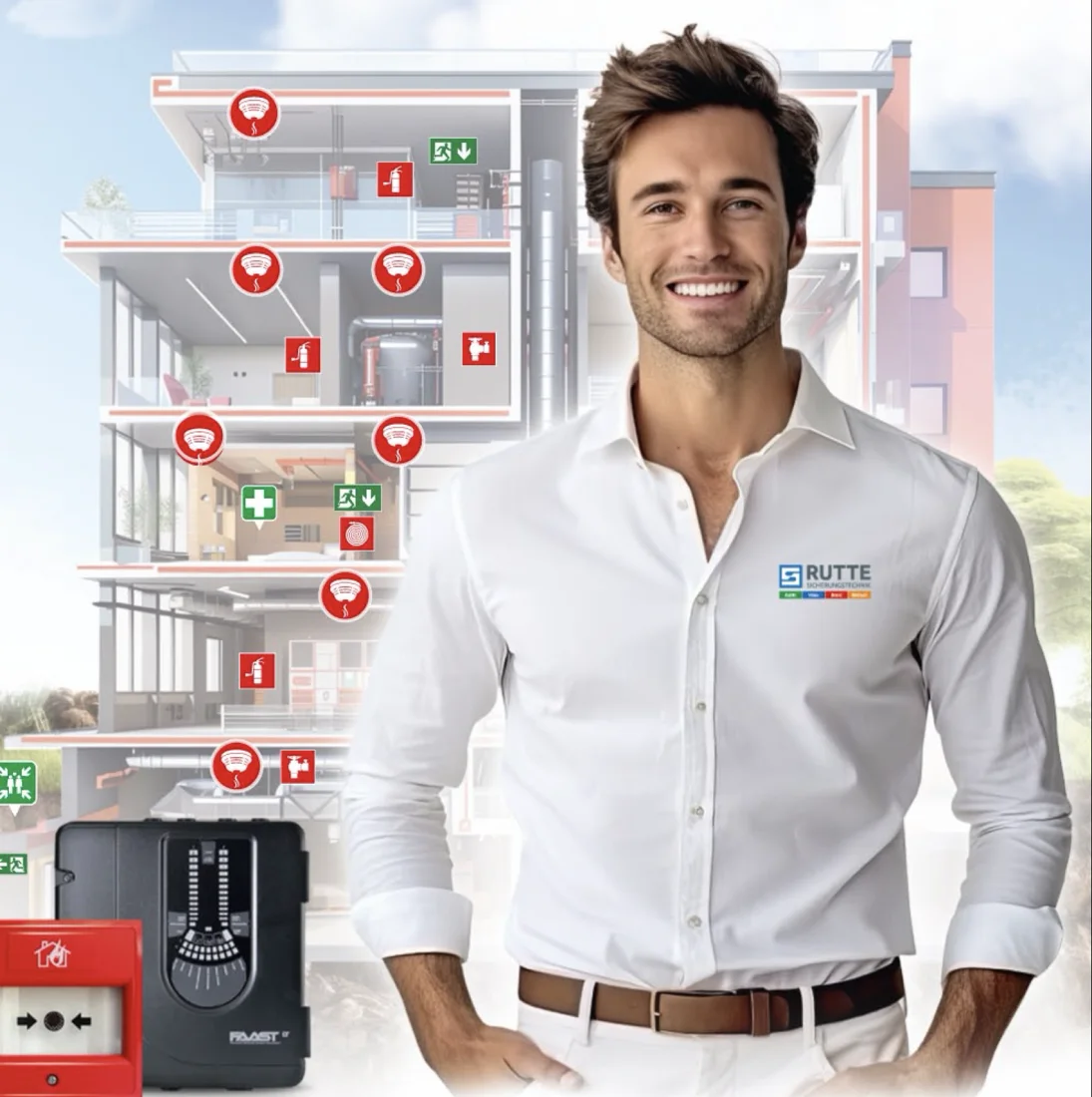
- Planned and installed to standardWe plan and build fire alarm systems in line with the applicable regulations DIN 14675 and VdS 2095.
- Connection to the fire brigadeThe system is connected to the local fire brigade or to an alarm receiving centre.
- Maintenance and detector replacementWe carry out the required inspections, maintenance and the replacement of detectors that are due.
- Takeover of existing systemsWe also maintain systems from common manufacturers that were installed by another company.
How a fire alarm system works
Detect early, alert precisely, protect people and assets.
- 01DetectDetectors sense smoke, heat or flames.
- 02LocateThe fire alarm panel shows the exact location.
- 03AlertThe building is warned and the fire service is called.
- 04ControlFire controls close doors and release escape routes.
What a fire alarm system is for
Automatic fire alarm systems protect people and buildings. The smoke sensors are so sensitive that they detect even the smallest smoke particles in the air.
This head start is decisive. People leave the building in time, and the fire brigade is on site before the fire spreads.
What we do for you
We plan the installation so that your operations continue, and coordinate the work with IT, construction and facility management. Modernisation during ongoing operations is also possible.
- Consultation and project engineering
- Delivery and installation
- Connection to the fire brigade or an alarm receiving centre
- Support during acceptance by authorised inspection experts (Prüfsachverständige) and VdS
- Maintenance and a round-the-clock emergency service line
- Detector replacement
- Maintenance takeover for existing systems, with an inspection report
When a fire alarm system is mandatory
Whether a fire alarm system is mandatory follows from the building code of the federal state, the special building regulations and the building permit. The requirements differ from one German federal state to another. Conditions from the fire protection concept and from the insurer may be added. DIN VDE 0833-1/2 and DIN 14675 apply to planning, installation and operation.
A fire alarm system is often required for, for example:
- Larger retail premises
- Accommodation such as hotels
- Places of assembly
- Industrial buildings with large fire compartments, increased fire risk or storage of hazardous substances
- Hospitals and care facilities
- High-rise buildings
System types and detectors
Conventional systems combine detectors into groups. In an alarm, the control panel shows the affected group but not the individual detector. This cost-effective variant suits smaller buildings. In addressable systems every detector has its own address, so the location of the fire can be pinpointed.
Thanks to their ring-shaped cabling, loop systems keep working even if a cable is interrupted, and they are easy to extend. Which system fits depends on the use of the building, legal requirements, insurance requirements and cost-effectiveness.
- Optical smoke detectors detect visible smoke particles
- Heat detectors respond to changes in temperature
- Multi-sensor detectors combine several detection principles
- Flame detectors register the UV or infrared radiation of open flames
- Linear detectors monitor large areas
- Aspirating smoke detectors for particularly sensitive detection
- Wireless fire detectors for listed buildings
Maintenance and detector replacement
Servicing follows DIN VDE 0833-1 and DIN 14675. It comprises a quarterly inspection, that is four times a year at roughly equal intervals, and annual maintenance of the system with its detectors, controls and transmission paths. Every visit is documented in the log book.
Additional tests are advisable after building alterations, after faults or false alarms, after fire incidents and when the use of a room changes. Depending on the law of the federal state, recurring tests by authorised inspection experts (Prüfsachverständige) are also required.
Detector replacement is governed by DIN 14675-1. Automatic point-type smoke detectors without contamination compensation are replaced or factory-checked after 5 years, detectors with contamination compensation after 8 years. The reasons are contamination of the measuring chamber, declining sensor sensitivity and a growing risk of false alarms.
Standards and certifications
- DIN 14675
- VdS 2095
- DIN VDE 0833-1/2
Manufacturers and systems
- ESSER
- Detectomat
Frequently asked questions
What determines the cost of a fire alarm system for a commercial building?
The size of the building, the number of detectors, the required protection category and the conditions set out in the fire protection concept. Flat-rate figures are therefore not credible. Our project engineering team prepares a binding quotation.
How long do planning and installation of a fire alarm system take?
That depends on the building. For smaller commercial buildings, it often takes only a few weeks from order to acceptance. For large industrial sites with coordination with the authorities, connection to the fire brigade and acceptance by authorised inspection experts, it can take several months.
Can RUTTE take over the maintenance of a system installed by another company?
Yes. We are a regional base (Regiostützpunkt) for Honeywell Esser, Detectomat, Telenot, Hekatron and Notifier and take over existing systems from these and other common manufacturers. We start with an inspection report on the technical condition. After that, support runs under a maintenance or SLA contract. Our emergency service line can be reached around the clock.
How can false alarms and chargeable fire brigade call-outs be avoided?
The local authority may charge the operator for the call-out caused by a false alarm from the system. Effective countermeasures are the right detector technology for each room use, for example multi-criteria detectors in kitchens or dusty areas, two-detector dependency before the alarm is forwarded, regular maintenance and detector replacement on schedule.
What are my duties as the operator of a fire alarm system?
You must appoint a trained person, have the system inspected and maintained regularly, keep the log book and have faults rectified without delay. Otherwise, in the event of a loss, your insurance cover may be at risk and liability risks arise.