

Systems
Perimeter & fence protection
Detection at the site boundary, before anyone reaches the building.
Perimeter protection detects intruders at the site boundary, before they reach the building. We plan outdoor detection around your protection goal and link the sensors to video technology so that every alarm can be checked on a live image.
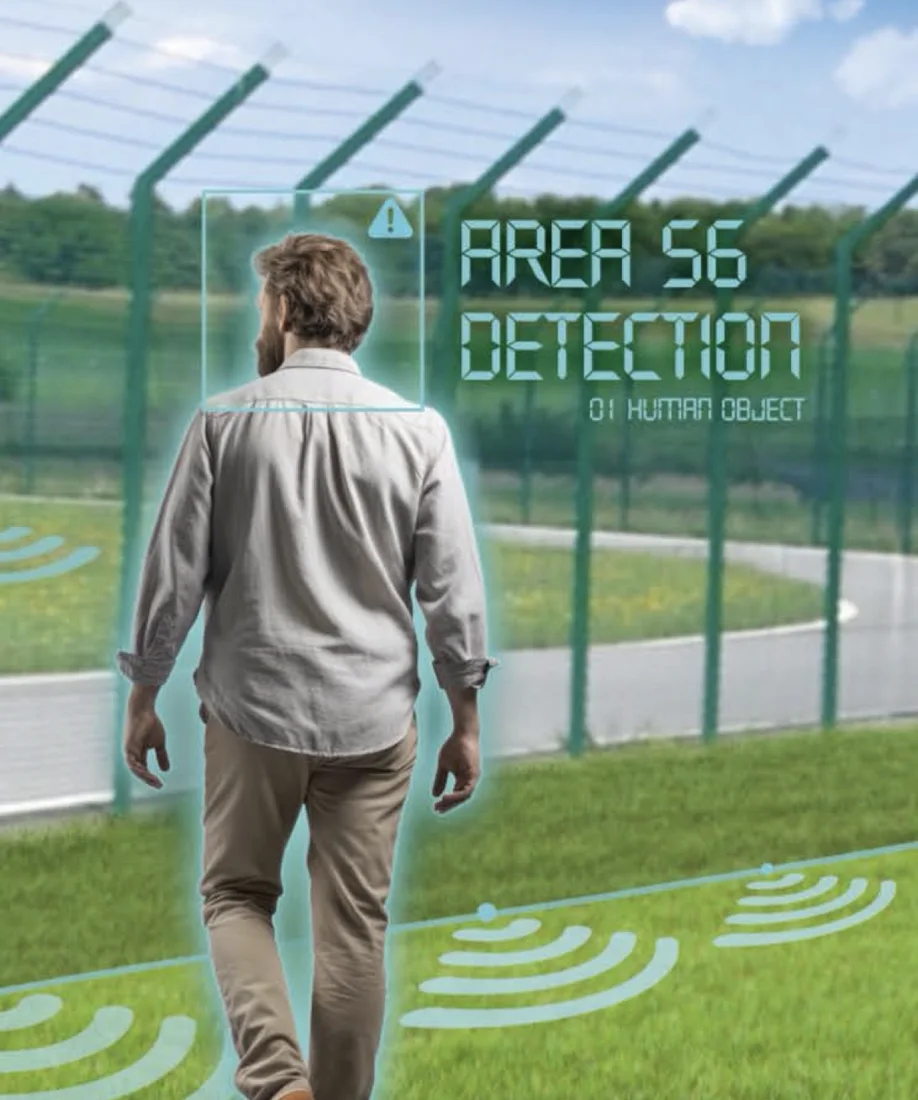
- Protection goal firstBefore planning, we agree the protection goal with you in detail on site.
- Alarm checks by live imageOutdoor sensors are linked to video surveillance so that alarms can be verified.
- Several technologiesFence sensors, buried sensors, laser scanners, infrared detectors and photoelectric beams can be combined.
- Retrofitting to existing fencesIn most cases sensor cables can be mounted directly on the existing fence.
Early detection at the site boundary
The earlier an intrusion is noticed, the more time there is to respond.
- 01DetectSensors on the fence or in the ground report the location.
- 02VerifyThe camera switches to the affected section.
- 03AlertThe control centre sees the location and live image.
- 04RespondSecurity staff respond precisely.
Protection in four shells
A security concept works from the outside in. Each shell detects earlier and buys time to respond.
1. PerimeterFence, gates, entrances
2. Open groundsVideo, radar, lighting
3. Building shellIntrusion alarm, access
4. Interior zonesAccess zones, fire, asset protection
What perimeter protection is for and where its limits lie
Outdoor detection reports people approaching the site or trying to get over the fence. It gains time before anyone reaches the building.
Detecting people outdoors is demanding. There is no outdoor monitoring entirely without false alarms. The technology is also expensive. It therefore has to be used with care and matched precisely to the protection goal.
What we do for you
During a site inspection we assess the grounds and the existing fence and determine which technology fits. We usually combine two technologies: one to detect and one to verify.
During installation we normally link the outdoor sensors to a video surveillance system. Triggered alarms can then be checked on a live image. This avoids unnecessary costs for call-outs by the security service.
- Consultation and project engineering
- Delivery and installation
- Linking to video surveillance
- Maintenance and a round-the-clock emergency service line
Technologies at a glance
The site determines which sensors fit. OPTEX sensors can be integrated directly into an existing video system over the network (IP) and send an event signal at the same moment an alarm is raised.
- Fence sensors from Senstar detect and locate intruders along the fence line
- Buried sensors from Senstar work covertly and are invisible to intruders
- Laser scanners from OPTEX create a freely adjustable protection zone and measure the size, speed and distance of a moving object. The range depends on the model
- Passive infrared outdoor detectors from OPTEX cover wide areas or long, narrow stretches, depending on the model
- Infrared photoelectric beams from OPTEX monitor a line and trigger when the beam is interrupted
- Area scanners from SICK with detection angles that depend on the model, up to all-round coverage
Example applications for area scanners
Area scanners protect outdoor objects horizontally or vertically. Typical applications are:
- Monitoring doors, gates and windows
- Securing façades
- Monitoring roof areas
- Vertical protection of a fence
- Climb-over protection on wall tops
- Horizontal monitoring of open areas
Manufacturers and systems
- Senstar
- OPTEX
- SICK
Frequently asked questions
What determines the cost of perimeter protection for company premises?
The length of the fence, the topography of the site, the chosen technology (fence sensors, laser scanners, buried sensors, thermal imaging) and whether video verification is required. A sound calculation is only possible after a site inspection.
How reliable is outdoor detection in wind, weather and with animals?
No outdoor detection works entirely without false alarms. Modern fence sensors can use vibration analysis to distinguish between a storm and someone climbing over. Laser scanners assess object size and speed, and AI video verification largely filters out animals. The right combination and parameter settings are what count.
Fence sensors, laser scanners or thermal imaging: what suits our site?
With a sound existing fence, fence sensors are often the most economical option. Where the approach is open, area scanners and thermal imaging pick up movement before the fence. Buried sensors remain invisible. We usually combine two technologies.
Can our existing fence be retrofitted?
In most cases, yes. Sensor cables, for example from Senstar, are mounted directly on the existing fence, provided it is mechanically sound. A new fence is only needed if the old one is dilapidated. We check this during the site inspection.
How quickly do we learn of an intrusion attempt and what happens then?
Detection reports in real time which section of the fence is affected. The linked camera supplies the live image for verification to your control room or to an alarm receiving centre, which starts the intervention. A loudspeaker announcement can often drive intruders off at the fence.