
Systems
Fire alarm systems
Fire alarm systems to DIN 14675: planning, installation and maintenance.
An automatic fire alarm system detects a fire while it is still developing. This gains time to evacuate the building and alert the fire brigade. We plan, install and maintain fire alarm systems in accordance with DIN 14675 and VdS 2095.
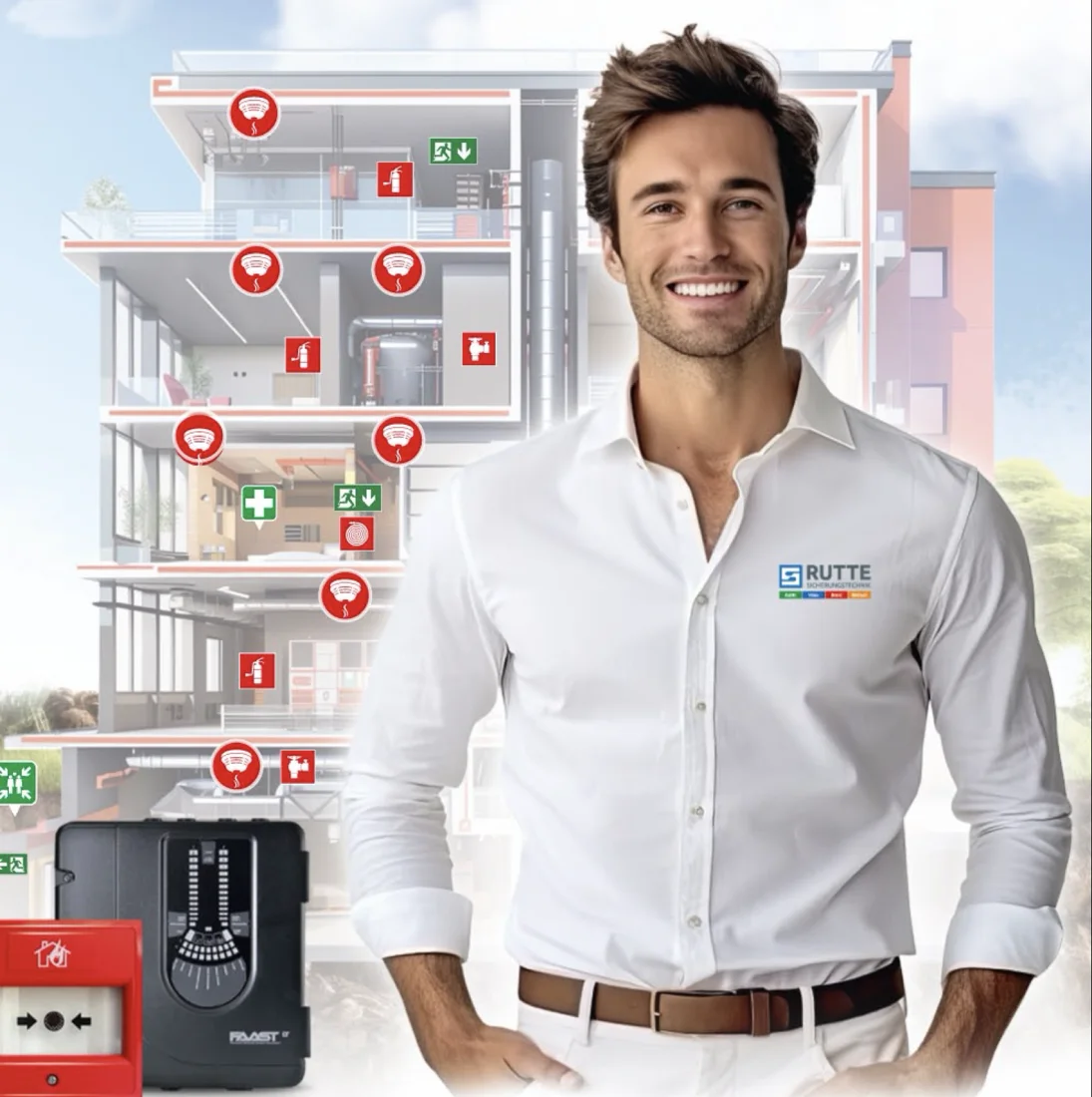
- Planned and installed to standardWe plan and build fire alarm systems in line with the applicable regulations DIN 14675 and VdS 2095.
- Connection to the fire brigadeThe system is connected to the local fire brigade or to an alarm receiving centre.
- Maintenance and detector replacementWe carry out the required inspections, maintenance and the replacement of detectors that are due.
- Takeover of existing systemsWe also maintain systems from common manufacturers that were installed by another company.
At a glance
- Service
- Fire alarm systems: Fire alarm systems to DIN 14675: planning, installation and maintenance.
- For whom
- Operators of buildings with a fire alarm obligation or their own protection goals: industry, warehouses, hospitals, hotels, public administration
- Service area
- Saxony-Anhalt, Saxony and Thuringia, with a focus on Halle and Leipzig; across Germany through the Sesenet35 installer network
- Standards and qualifications
- DIN 14675, VdS 2095, DIN VDE 0833-1/2
- Manufacturers
- ESSER, Detectomat
- Support
- Planning, installation and maintenance from a single source; service hotline around the clock
- Enquiries
- +49 34602 4080-20, projektierung@rutte.de
How a fire alarm system works
Detect early, alert precisely, protect people and assets.
- 01DetectDetectors sense smoke, heat or flames.
- 02LocateThe fire alarm panel shows the exact location.
- 03AlertThe building is warned and the fire service is called.
- 04ControlFire controls close doors and release escape routes.
Fire detection technology to DIN 14675
When there is a fire, everyone in the building has to know. Automatic fire alarm systems protect people and buildings. The technology detects a fire as early as its incipient phase.
The smoke sensors are so sensitive that they detect even the smallest smoke particles in the air. This gains important time. People leave the building in good time, and the fire service is on site before the fire spreads.
We design and install fire alarm systems in accordance with the applicable regulations (DIN 14675 and VdS 2095). Connection to the local fire service or to an alarm receiving centre completes the protection.
Our services
- Consultation and project engineering
- Delivery and installation
- Support for acceptance by inspection experts and VdS
- Maintenance and a round-the-clock emergency service line
Manufacturers

ESSER by Honeywell

Detectomat
RUTTE is a regional support centre for Honeywell Esser, Detectomat, Telenot, Hekatron and Notifier.
Detector replacement to DIN 14675
Regular replacement of the fire detectors is part of operating a fire alarm system safely. Under DIN 14675-1, automatic point-type smoke detectors without drift compensation are replaced or factory-tested after 5 years, and detectors with drift compensation after 8 years.
Why replacement is necessary
- Age-related contamination of the measuring chamber
- Declining sensitivity of the sensors
- Increased risk of false alarms
- Possible material fatigue
- Technological progress
How the replacement is carried out
- Documentation of the existing detectors
- Disablement of the detector zone concerned
- Removal of the old detectors
- Installation of the new detectors
- Functional test in accordance with DIN 14675
- Updating of the system documentation
When does a fire alarm system have to be installed?
A fire alarm system is mandatory for many buildings. Whether this applies to your building follows from the state building code, the regulations for special buildings and the building permit. The requirements differ from one federal state to another.
Legal basis
- Building codes of the federal states
- Regulations for special buildings
- Requirements of workplace law
- Conditions imposed by the insurer
- DIN VDE 0833-1 and DIN VDE 0833-2
- DIN 14675
Buildings for which a fire alarm system is often required
- Retail premises, depending on the sales area and where sales rooms are in the basement
- Accommodation such as hotels, depending on size and number of beds, and where guest rooms have no windows
- Places of assembly, depending on the number of people, where rooms are in the basement and where there are large stages
- Industrial buildings with large fire compartments, increased fire risk or storage of hazardous substances
- Hospitals and care facilities, including intensive care units and operating and treatment areas
- High-rise buildings, including mixed use, and larger office buildings
Further factors
- Requirements of the insurer
- Conditions imposed by the authorities
- Fire protection concept
- Risk assessment
- Number of people in the building
- Type of use
- Structural conditions
Important notes
- Installation is carried out by certified specialist companies
- Regular maintenance and testing are mandatory
- Where connection to the fire service is required, the system must be connected there
- Documentation of the system is required
- Staff must be instructed
A fire alarm system can make sense even without an obligation
- To protect people and property
- As a basis for more favourable insurance terms, depending on the insurer
- For early fire detection
- For automatic alerting
When should a fire alarm system be maintained?
Servicing a fire alarm system is mandatory and follows DIN 14675 and DIN VDE 0833-1. A quarterly inspection and annual maintenance are specified.
Maintenance is prevention. It preserves the functional reliability of the system and avoids costly faults.
Quarterly inspection
- Check of the fire alarm control panel
- Test of the power supply
- Visual inspection of the peripheral devices
- Test of the alarm transmission equipment
- Check of displays and messages
Annual maintenance
- Complete test of the system
- Functional test of all detectors and components
- Test of the alarm devices
- Test of all control functions
- Test of the batteries
- Check of the transmission paths
- Review and updating of the documentation
Additional tests
- After building alterations
- After faults or false alarms
- After fire incidents
- When the use of rooms changes
- At the request of the authorities
What is documented at every maintenance visit
- Date and time
- Type of work carried out
- Defects found
- Remedial work carried out
- Name of the maintenance technician
Maintenance notes in detail
Qualification3
- Maintenance only by certified specialist companies
- Proof of competence in accordance with DIN 14675
- Knowledge of the manufacturer's system concerned
Detector care4
- Cleaning of the detectors
- Inspection of the measuring chambers
- Check of the fixings
- Visual inspection for damage
System test4
- Test of the software
- Check of the programming
- Check of the interfaces
- Review of the alarm organisation
Points requiring particular attention4
- Degree of contamination of the detectors
- Ambient conditions
- Ageing of the components
- Technical innovations
Recommendations for operators5
- Conclude a maintenance contract
- Define fixed contact persons
- Document fault messages
- Keep spare parts in stock
- Train staff regularly
Possible consequences of inadequate maintenance5
- Risk to insurance cover
- Conditions imposed by the authorities
- Increased risk of false alarms
- Possible failure in an emergency
- Legal consequences
What proper maintenance secures5
- The functional reliability of the system
- The protection of life and property
- Compliance with legal requirements
- The avoidance of liability risks
- Lower operating costs through fewer faults
What types of fire alarm system are there?
Fire alarm systems come in different designs that differ in technology and application.
Conventional fire alarm systems are the classic variant. They work with detector zones grouped into lines. In the event of an alarm, the control panel shows the detector zone concerned but not the individual detector. This cost-effective solution suits smaller properties.
In addressable fire alarm systems every detector has its own address. In the event of a fire, the location can be determined precisely. The emergency services can respond faster, and the system offers extensive options for diagnostics and maintenance.
Loop systems are particularly resilient. Thanks to the ring-shaped cabling, the system remains operational even if a line is interrupted. Extensions and changes can be implemented flexibly.
Automatic fire detectors
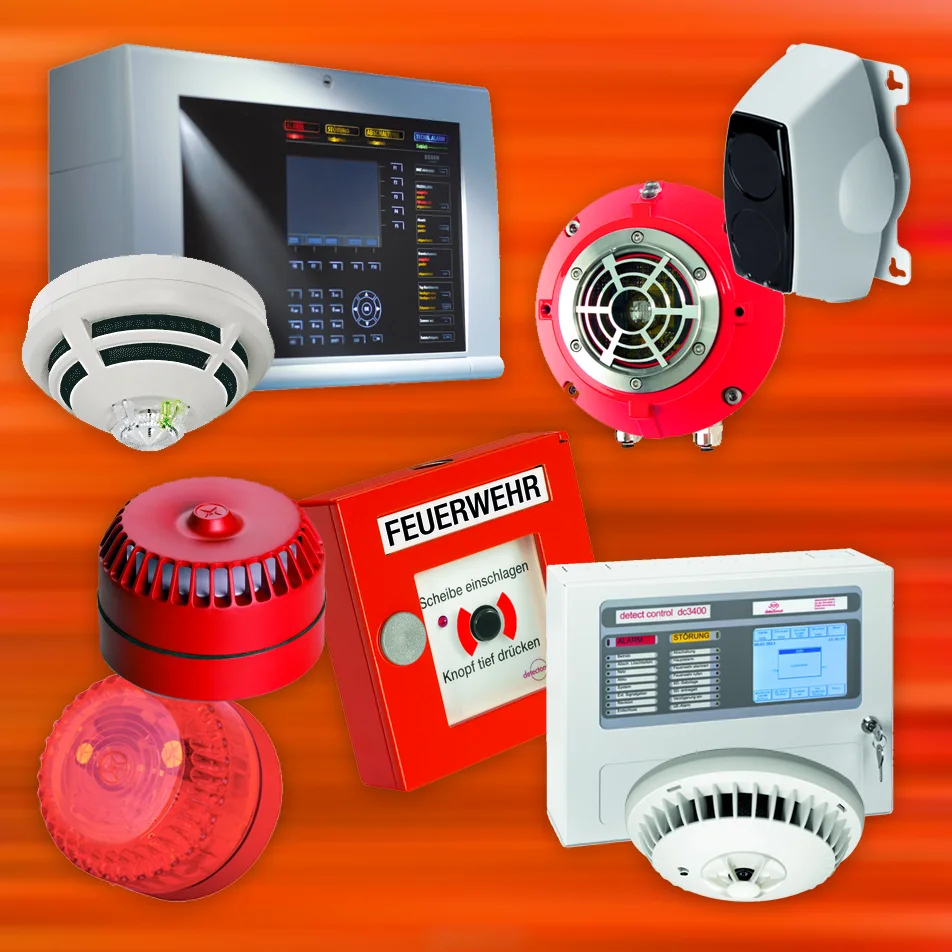
- Optical smoke detectors detect visible smoke particles
- Heat detectors respond to changes in temperature
- Multi-sensor detectors combine several detection principles
- Flame detectors register the UV or infrared radiation of open flames
- Linear detectors monitor large areas
Special systems
- Aspirating smoke detectors for particularly sensitive detection
- Wireless fire detectors for listed buildings
- Video-based early fire detection
- Special detectors for industrial plants
Alerting and control
- Audible signals from sounders or voice announcements
- Visual warning from beacons
- Automatic notification of the fire service
- Activation of fire protection equipment
Integration and networking
- Central monitoring and control
- Documentation of all events
- Remote maintenance and remote diagnostics
- Connection to other security systems and the building management system
Selection criteria
- Use of the building
- Legal requirements
- Requirements of the insurer
- Cost-effectiveness
- Future-proofing
What we do for you
We plan the installation so that your operations continue, and coordinate the work with IT, construction and facility management. Modernisation during ongoing operations is also possible.
- Consultation and project engineering
- Delivery and installation
- Connection to the fire brigade or an alarm receiving centre
- Support during acceptance by authorised inspection experts (Prüfsachverständige) and VdS
- Maintenance and a round-the-clock emergency service line
- Detector replacement
- Maintenance takeover for existing systems, with an inspection report
Maintenance and detector replacement
Servicing follows DIN VDE 0833-1 and DIN 14675. It comprises a quarterly inspection, that is four times a year at roughly equal intervals, and annual maintenance of the system with its detectors, controls and transmission paths. Every visit is documented in the log book.
Additional tests are advisable after building alterations, after faults or false alarms, after fire incidents and when the use of a room changes. Depending on the law of the federal state, recurring tests by authorised inspection experts (Prüfsachverständige) are also required.
Detector replacement is governed by DIN 14675-1. Automatic point-type smoke detectors without contamination compensation are replaced or factory-checked after 5 years, detectors with contamination compensation after 8 years. The reasons are contamination of the measuring chamber, declining sensor sensitivity and a growing risk of false alarms.
Standards and certifications
- DIN 14675
- VdS 2095
- DIN VDE 0833-1/2
Manufacturers and systems
- ESSER
- Detectomat
Frequently asked questions
What determines the cost of a fire alarm system for a commercial building?
The size of the building, the number of detectors, the required protection category and the conditions set out in the fire protection concept. Flat-rate figures are therefore not credible. Our project engineering team prepares a binding quotation.
How long do planning and installation of a fire alarm system take?
That depends on the building. For smaller commercial buildings, it often takes only a few weeks from order to acceptance. For large industrial sites with coordination with the authorities, connection to the fire brigade and acceptance by authorised inspection experts, it can take several months.
Can RUTTE take over the maintenance of a system installed by another company?
Yes. We are a regional base (Regiostützpunkt) for Honeywell Esser, Detectomat, Telenot, Hekatron and Notifier and take over existing systems from these and other common manufacturers. We start with an inspection report on the technical condition. After that, support runs under a maintenance or SLA contract. Our emergency service line can be reached around the clock.
How can false alarms and chargeable fire brigade call-outs be avoided?
The local authority may charge the operator for the call-out caused by a false alarm from the system. Effective countermeasures are the right detector technology for each room use, for example multi-criteria detectors in kitchens or dusty areas, two-detector dependency before the alarm is forwarded, regular maintenance and detector replacement on schedule.
What are my duties as the operator of a fire alarm system?
You must appoint a trained person, have the system inspected and maintained regularly, keep the log book and have faults rectified without delay. Otherwise, in the event of a loss, your insurance cover may be at risk and liability risks arise.