

Systems
Perimeter & fence protection
Detection at the site boundary, before anyone reaches the building.
Perimeter protection detects intruders at the site boundary, before they reach the building. We plan outdoor detection around your protection goal and link the sensors to video technology so that every alarm can be checked on a live image.
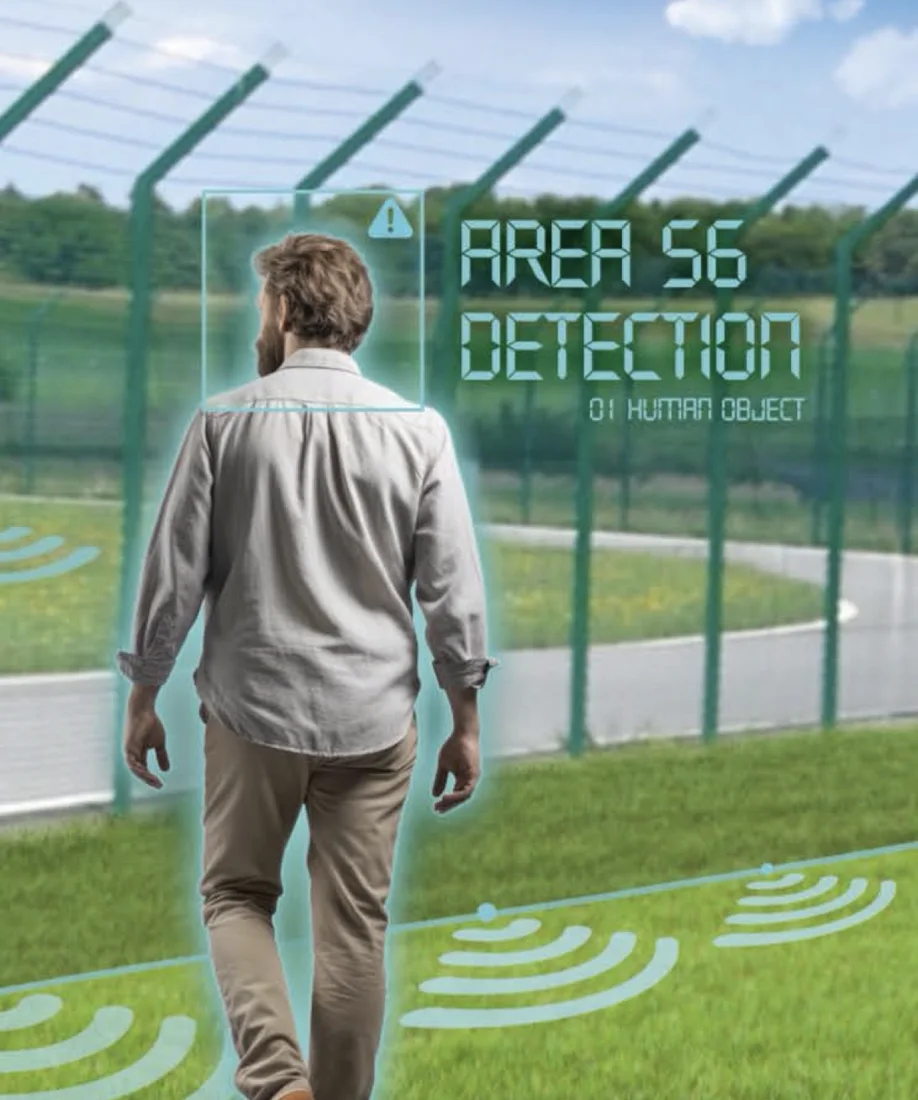
- Protection goal firstBefore planning, we agree the protection goal with you in detail on site.
- Alarm checks by live imageOutdoor sensors are linked to video surveillance so that alarms can be verified.
- Several technologiesFence sensors, buried sensors, laser scanners, infrared detectors and photoelectric beams can be combined.
- Retrofitting to existing fencesIn most cases sensor cables can be mounted directly on the existing fence.
At a glance
- Service
- Perimeter & fence protection: Detection at the site boundary, before anyone reaches the building.
- For whom
- Operators of large sites: industry, utilities, logistics, prisons and critical infrastructure
- Service area
- Saxony-Anhalt, Saxony and Thuringia, with a focus on Halle and Leipzig; across Germany through the Sesenet35 installer network
- Manufacturers
- Senstar, OPTEX, SICK
- Support
- Planning, installation and maintenance from a single source; service hotline around the clock
- Enquiries
- +49 34602 4080-20, projektierung@rutte.de
Early detection at the site boundary
The earlier an intrusion is noticed, the more time there is to respond.
- 01DetectSensors on the fence or in the ground report the location.
- 02VerifyThe camera switches to the affected section.
- 03AlertThe control centre sees the location and live image.
- 04RespondSecurity staff respond precisely.
Protection in four shells
A security concept works from the outside in. Each shell detects earlier and buys time to respond.
1. PerimeterFence, gates, entrances
2. Open groundsVideo, radar, lighting
3. Building shellIntrusion alarm, access
4. Interior zonesAccess zones, fire, asset protection
Outdoor detection and perimeter protection
Detecting people outdoors is a demanding subject. There is no outdoor monitoring entirely without false alarms.
The technology shown here therefore has to be used with care. During planning we agree the protection goal with you in detail on site. The products are expensive. Without this agreement, money is quickly invested in the wrong place.
During installation we normally link outdoor sensors to a video surveillance system. Triggered alarms can then be checked on the live image. This avoids unnecessary follow-up costs for call-outs by the security service.
Our services
- Consultation and project engineering
- Delivery and installation
- Self-installation possible by arrangement
- Maintenance and a round-the-clock emergency service line
Senstar: electronic fence protection
Sensors mounted on the fence detect and locate intruders along the fence line before they enter a site. Senstar offers a range of sensors for sites of every size.
Fully concealed, buried sensors do not change the appearance of a site and are invisible to intruders. Senstar offers two buried sensor technologies that have different advantages depending on the application.
Sensors on the fence and in the ground
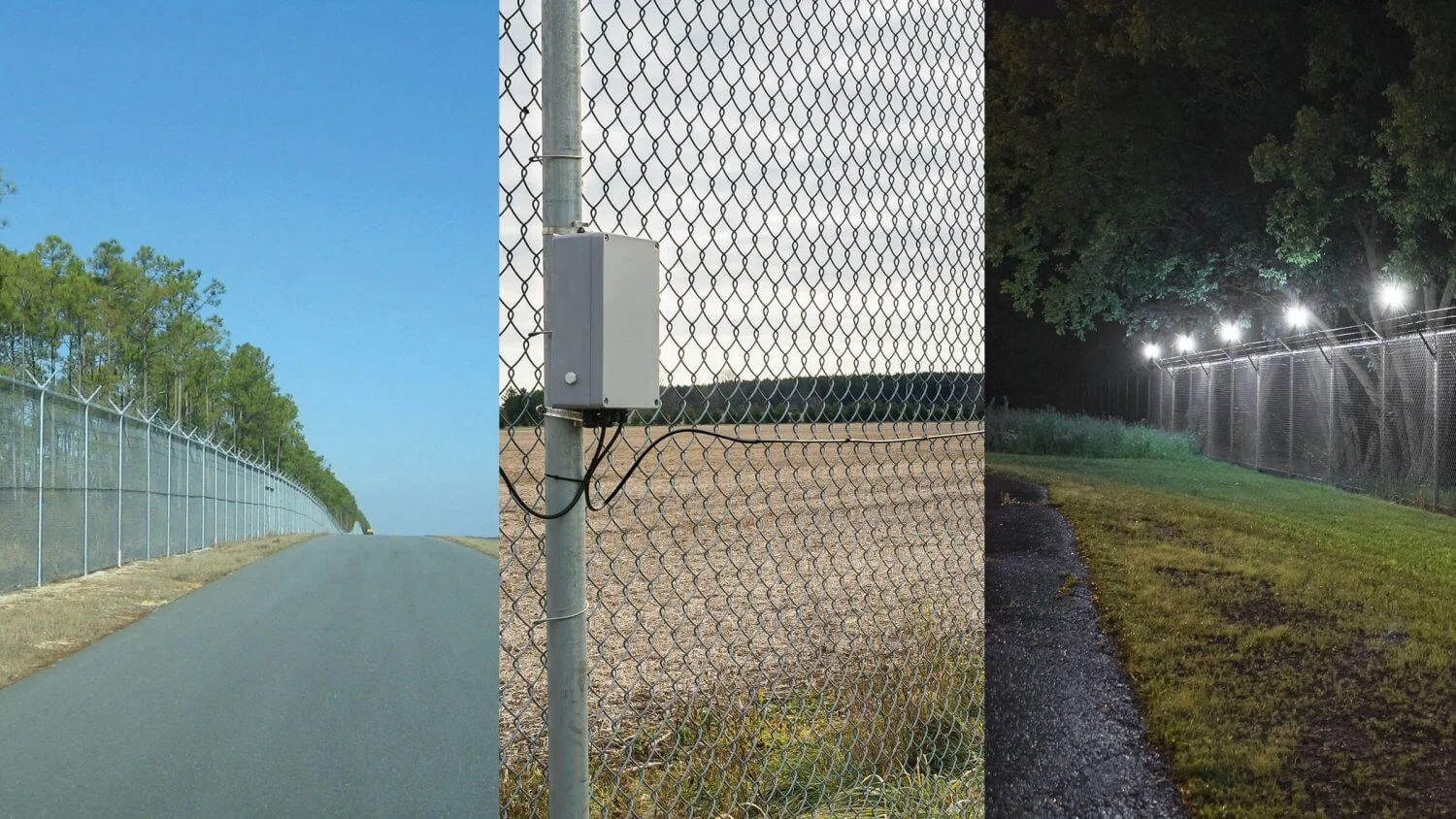
Fence sensors: detection along the fence line
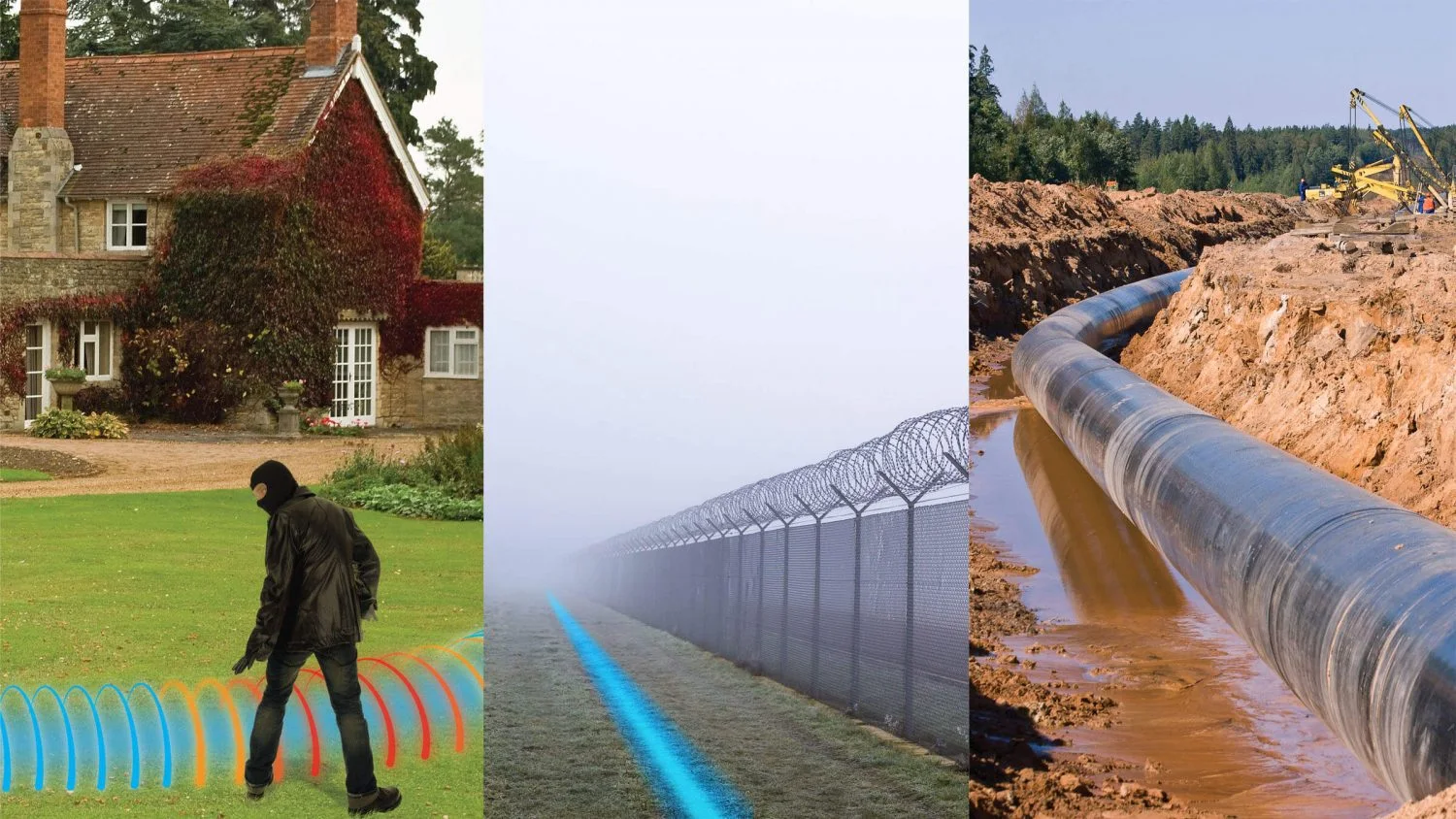
Buried sensors: concealed and invisible
Sensors from Senstar
Sensor cables can be retrofitted to an existing fence, provided it is mechanically sound. We check this during the site inspection.

OPTEX: outdoor sensors of the RED series
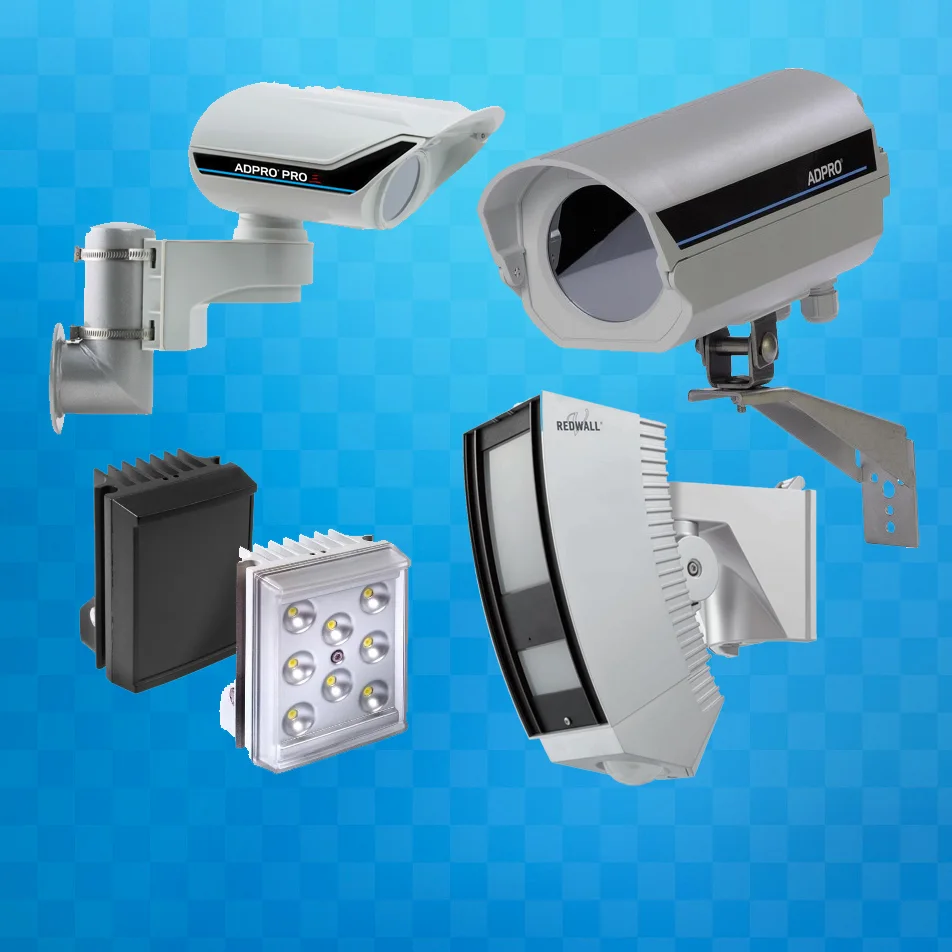
All sensors can be integrated directly into an existing video system over the network (IP). When a sensor reports an alarm, it sends an event signal at the same moment.
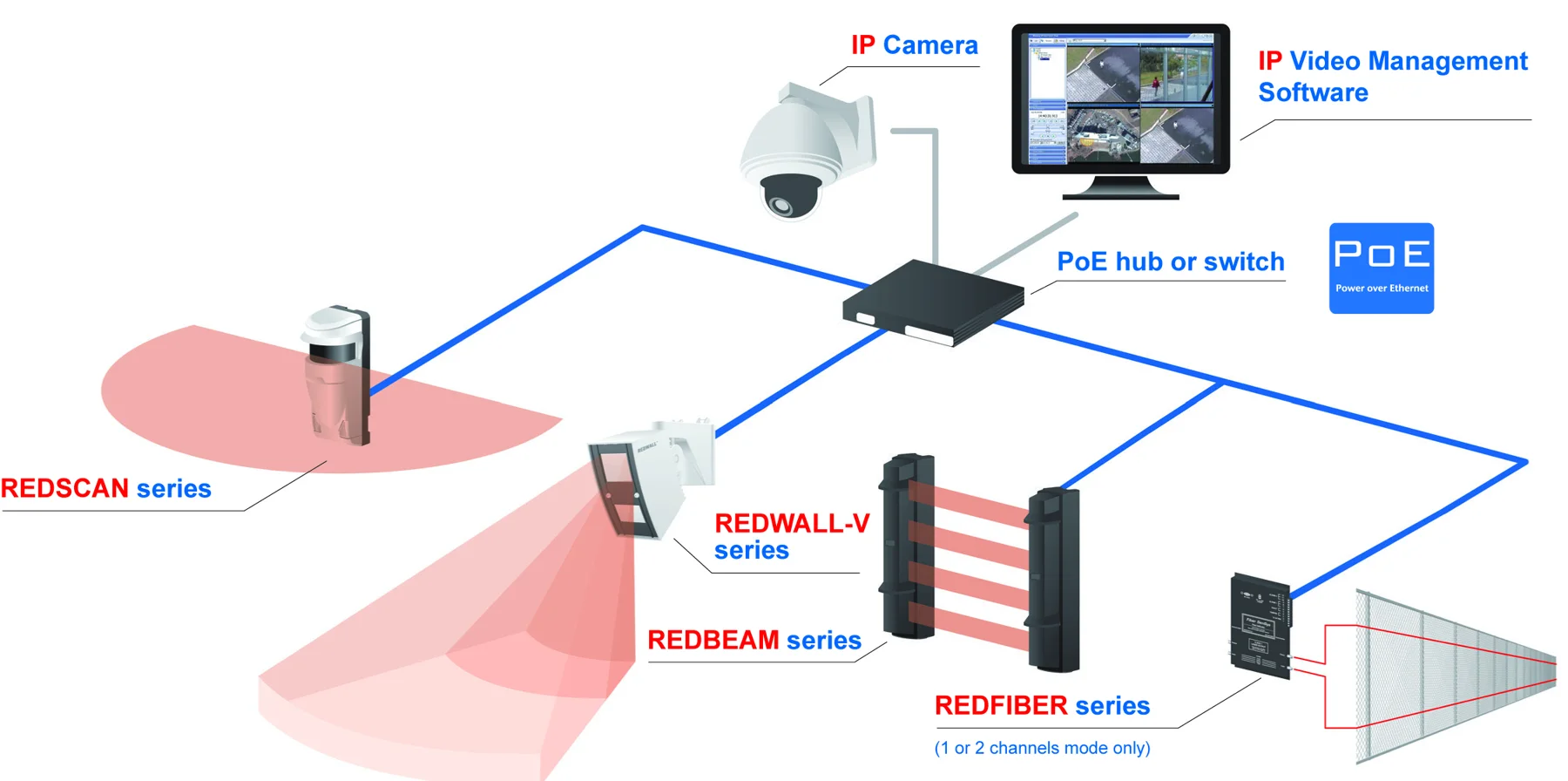
REDSCAN laser scanner
- Creates a freely adjustable protection zone whose range depends on the model
- Measures the time of flight of the laser beams to the object and back
- Registers the size, speed and distance of a moving object
- Acts like an invisible wall
REDWALL outdoor detectors
- Detection using passive infrared technology (PIR)
- Triggers when an intruder changes the temperature in the detection zone
- Volumetric outdoor detection
- For wide areas or for long, narrow stretches, depending on the model
REDBEAM photoelectric beam
- Infrared photoelectric beam consisting of transmitter and receiver for linear monitoring
- The transmitter emits continuously, and an interruption of the beams triggers the alarm
- The line can also serve as a monitoring zone for video analytics
The three sensor types
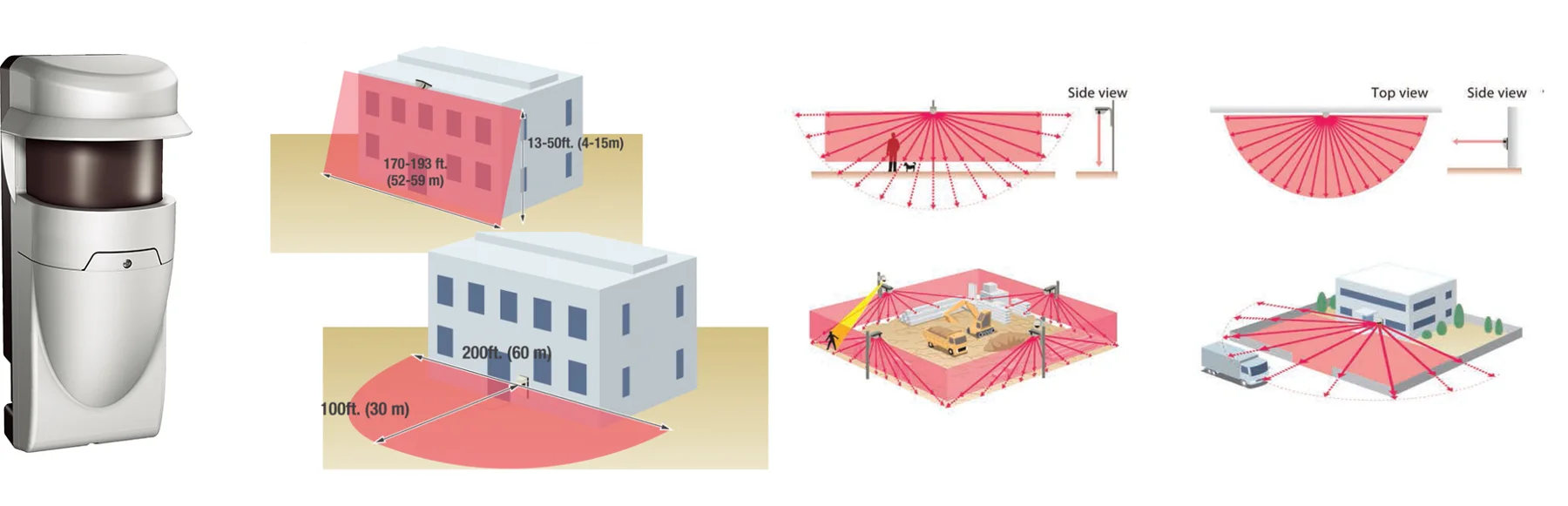
REDSCAN laser scanner: protection zones on buildings and open areas
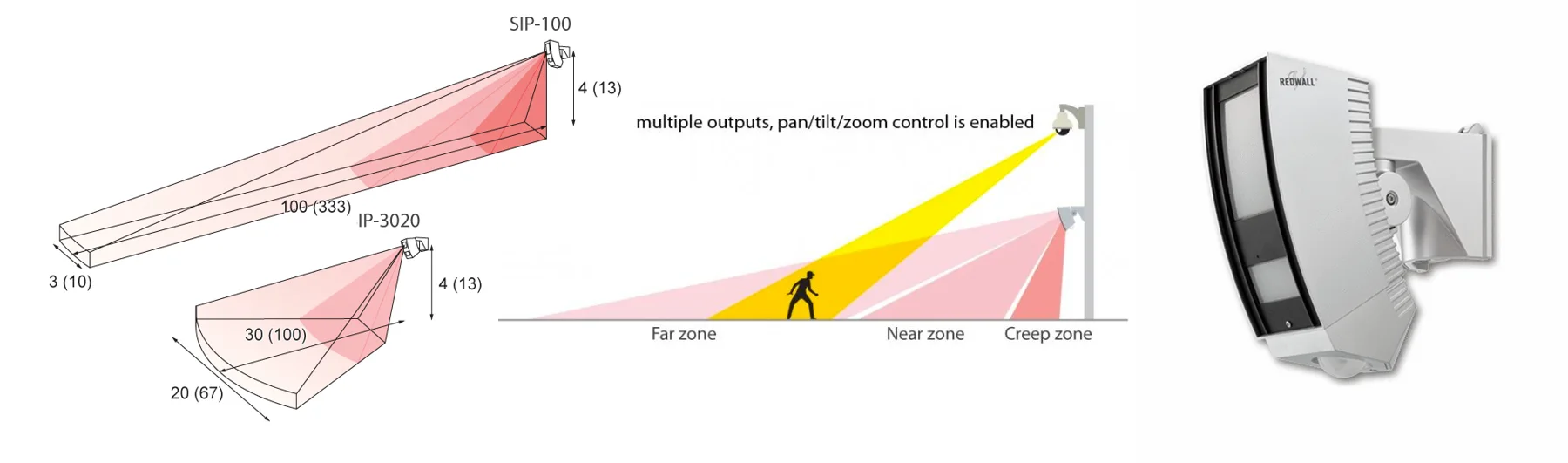
REDWALL outdoor detectors: detection zones
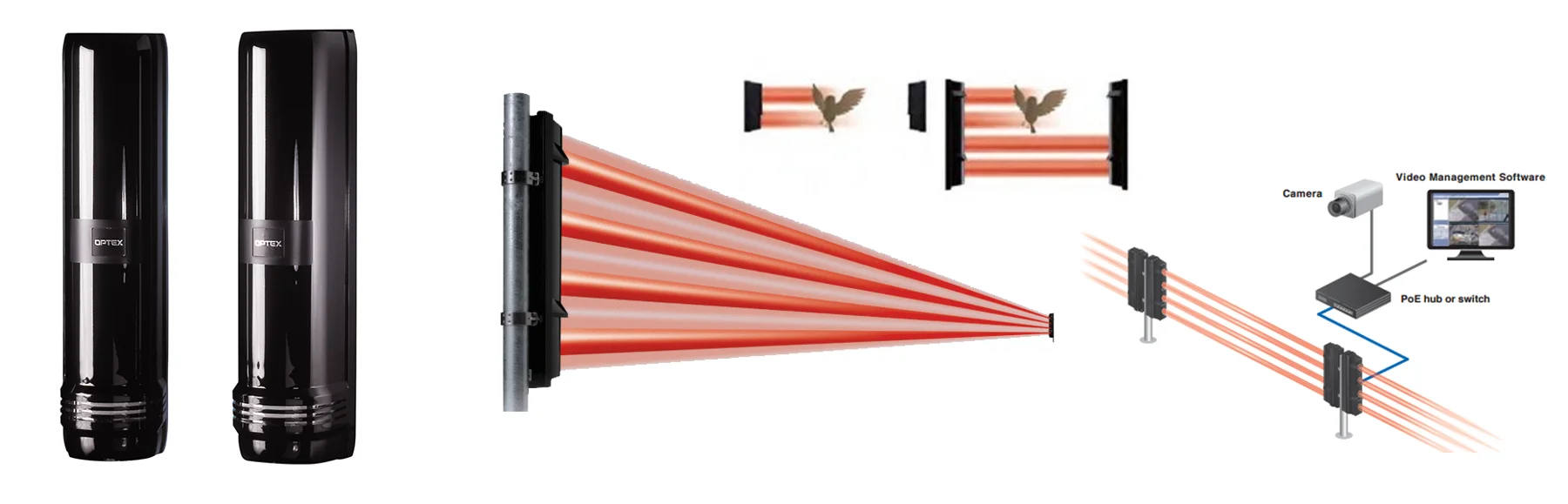
REDBEAM photoelectric beam: linear monitoring
Sensors from OPTEX
Laser scanners, passive infrared detectors and photoelectric beams complement one another. The site determines which combination fits.

SICK: outdoor object protection with area scanners
Area scanners from SICK protect outdoor objects horizontally or vertically. They are available with different detection angles up to all-round coverage. Range and detection area depend on the model.
Example applications
- Monitoring doors, gates and windows
- Securing façades
- Monitoring roof areas
- Vertical protection of a fence
- Climb-over protection on wall tops
- Horizontal monitoring of open areas
Outdoor object protection
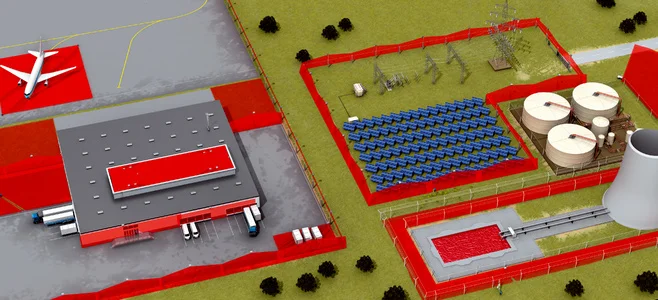
Protection of buildings, plant and open areas
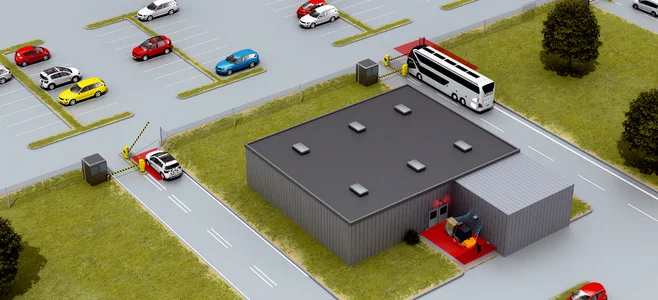
Monitoring of the vehicle entrance and building
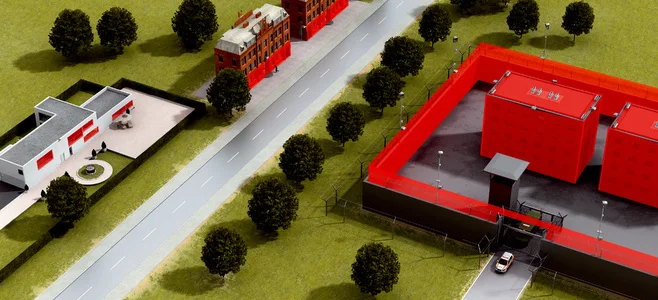
Protection along the site boundary
Area scanners and guide
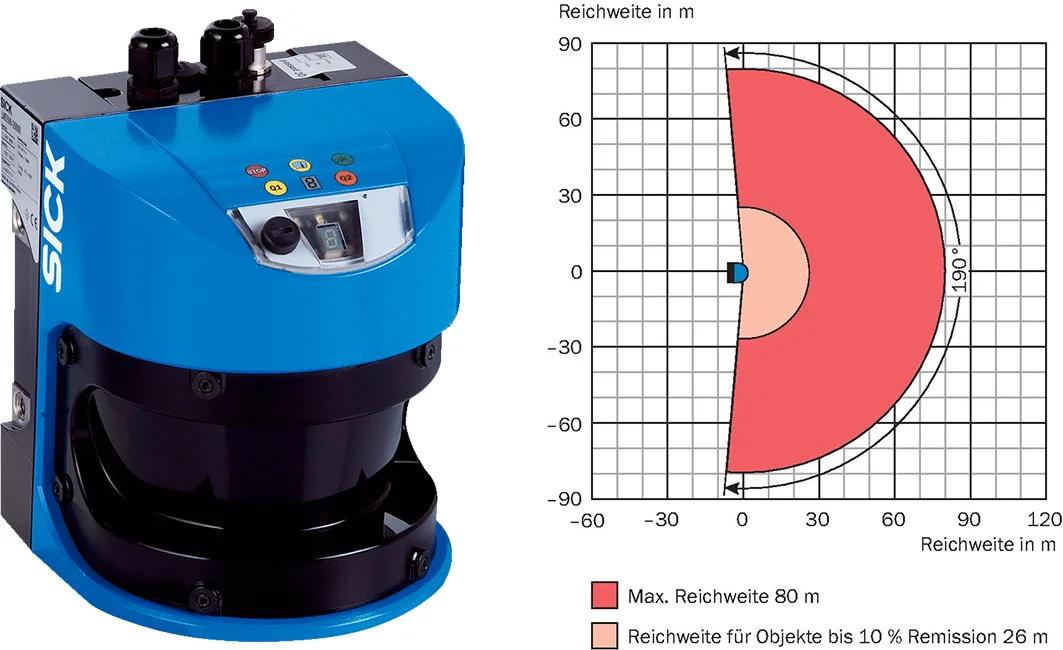
Area scanner with a 190-degree detection angle
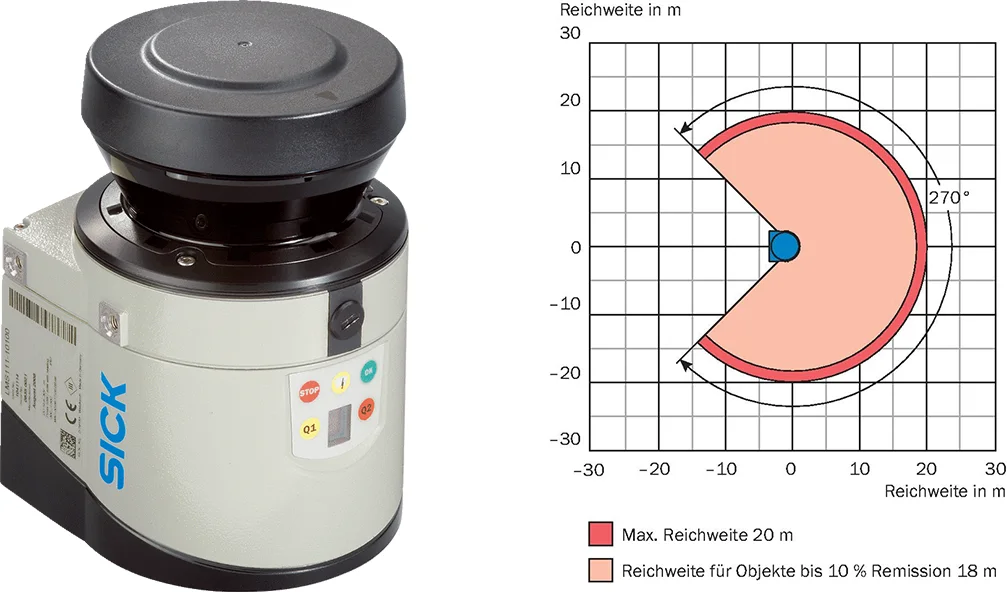
Area scanner with a 270-degree detection angle
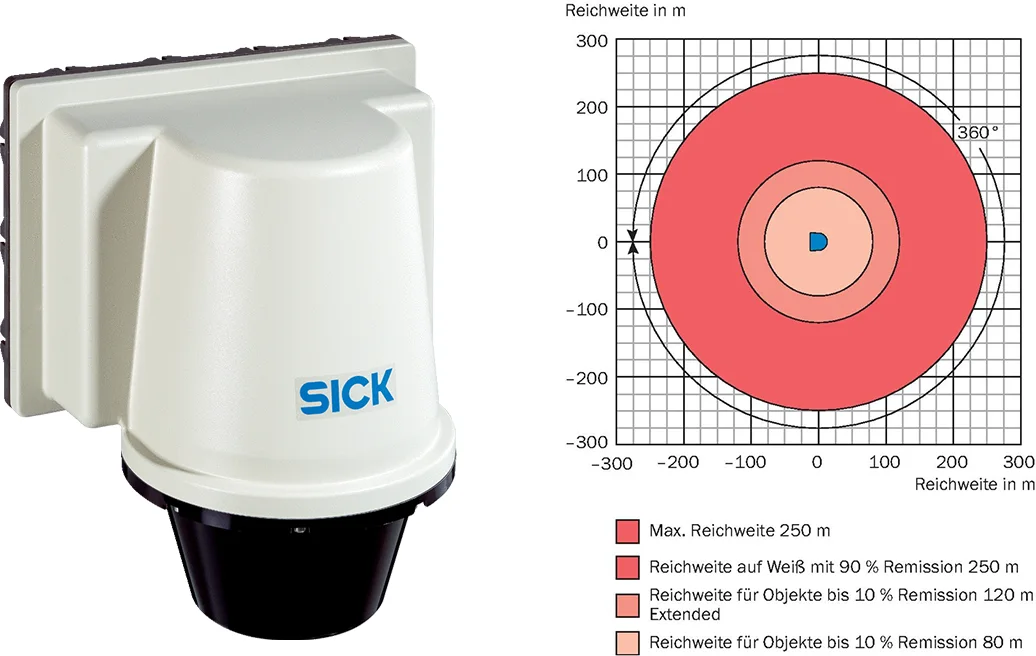
Area scanner with a 360-degree detection angle
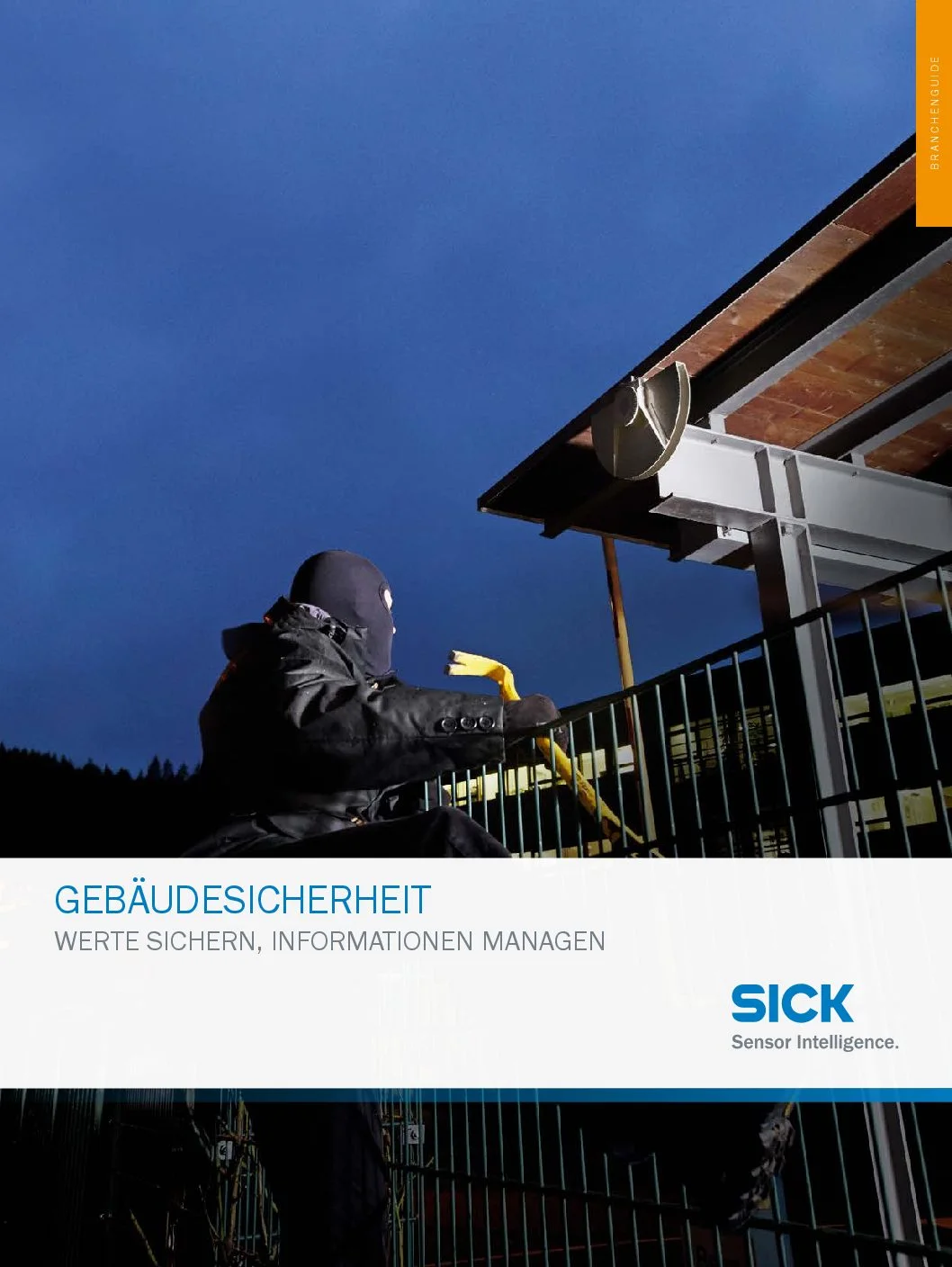
Building security guide from SICK
View PDF
Sensors from SICK
The diagrams of the area scanners show detection angles and ranges according to the manufacturer. We clarify during planning which values are achieved at the property.

What perimeter protection is for and where its limits lie
Outdoor detection reports people approaching the site or trying to get over the fence. It gains time before anyone reaches the building.
Detecting people outdoors is demanding. There is no outdoor monitoring entirely without false alarms. The technology is also expensive. It therefore has to be used with care and matched precisely to the protection goal.
What we do for you
During a site inspection we assess the grounds and the existing fence and determine which technology fits. We usually combine two technologies: one to detect and one to verify.
During installation we normally link the outdoor sensors to a video surveillance system. Triggered alarms can then be checked on a live image. This avoids unnecessary costs for call-outs by the security service.
- Consultation and project engineering
- Delivery and installation
- Linking to video surveillance
- Maintenance and a round-the-clock emergency service line
Manufacturers and systems
- Senstar
- OPTEX
- SICK
Frequently asked questions
What determines the cost of perimeter protection for company premises?
The length of the fence, the topography of the site, the chosen technology (fence sensors, laser scanners, buried sensors, thermal imaging) and whether video verification is required. A sound calculation is only possible after a site inspection.
How reliable is outdoor detection in wind, weather and with animals?
No outdoor detection works entirely without false alarms. Modern fence sensors can use vibration analysis to distinguish between a storm and someone climbing over. Laser scanners assess object size and speed, and AI video verification largely filters out animals. The right combination and parameter settings are what count.
Fence sensors, laser scanners or thermal imaging: what suits our site?
With a sound existing fence, fence sensors are often the most economical option. Where the approach is open, area scanners and thermal imaging pick up movement before the fence. Buried sensors remain invisible. We usually combine two technologies.
Can our existing fence be retrofitted?
In most cases, yes. Sensor cables, for example from Senstar, are mounted directly on the existing fence, provided it is mechanically sound. A new fence is only needed if the old one is dilapidated. We check this during the site inspection.
How quickly do we learn of an intrusion attempt and what happens then?
Detection reports in real time which section of the fence is affected. The linked camera supplies the live image for verification to your control room or to an alarm receiving centre, which starts the intervention. A loudspeaker announcement can often drive intruders off at the fence.
More topics
 Barriers, turnstiles & parking systemsVehicle and pedestrian access control for plants and car parks.Learn more
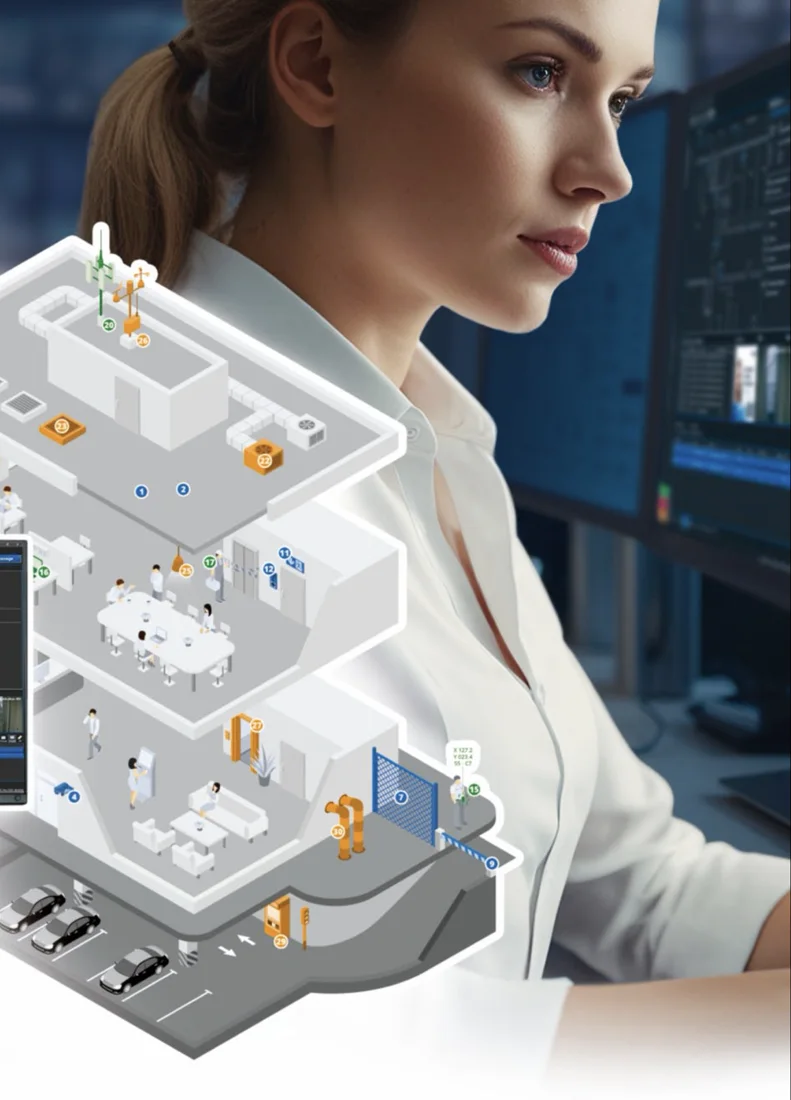 Security management (PSIM)Every system brought together in one control room.Learn more
 Cyber security for security systemsProtecting installed systems in line with NIS2 and ISO 27001.Learn more