

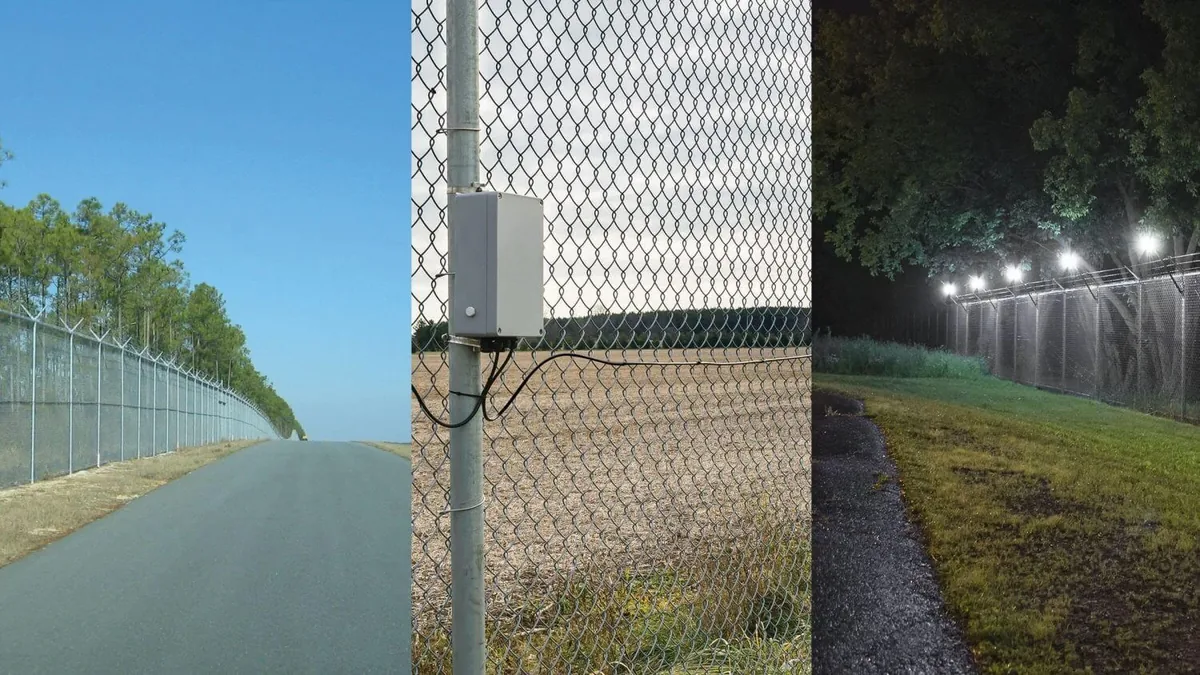
Which perimeter technology is suitable depends on the site: the fence, the length and course of the boundary, vegetation, ground and surroundings. Detection on the fence, sensors in open ground and video for verification usually complement one another.
What should perimeter protection achieve?
Perimeter protection should detect an intruder at the property boundary and not only at the building. This gains time for the response. Four tasks work together: the fence delays, the sensors detect, video verifies the alarm and a defined body responds.
Which technology suits which site?
The technology follows the site and not the other way round. As a guide:
- Sturdy fence in place: sensor cables on the fence detect climbing and cutting and assign the alarm to a section
- Open areas without a fence: laser scanners or radar form monitored zones in open ground
- Long, straight boundary sections: infrared beams or thermal cameras with video analytics
- Uneven or overgrown ground: lines of sight are restricted, so detection on the fence or in the ground is suitable here
- Gates and entrances: barriers, access control and video as a solution of their own
- Areas used temporarily, such as construction sites: mobile video surveillance
Which sources of interference do you need to plan for?
Outdoors, animals, vegetation, weather and traffic along the boundary trigger alarms. Fog, snow and strong wind have different effects depending on the method. A single method therefore often reaches its limits.
Two different methods and verification by video reduce false alarms. Upkeep of the grounds is part of this. Vegetation on the fence and in the monitored zones has to be cut back regularly.
Why is video part of it?
Video is part of it because only the image shows what triggered an alarm. The control room or the guarding service sees the section concerned and decides on the response. In darkness, this needs lighting or thermal cameras.
The cameras cover only your own site. Signage, access rights and retention period have to be defined. This article gives an overview and is no substitute for legal advice.
How is the concept developed?
The concept is developed during a survey of the site, if possible by day and in darkness. Fence, ground, vegetation, lighting and cable routes are recorded. A zone plan follows from this.
The alarm route is just as important: who receives the alarm, who sees the image and who goes out? After installation, the sensors are set up for the site and readjusted during operation. Regular maintenance keeps the settings stable. RUTTE plans perimeter protection after a survey on site.