

Sectors
Construction sites & events
Temporary protection with mobile video towers.
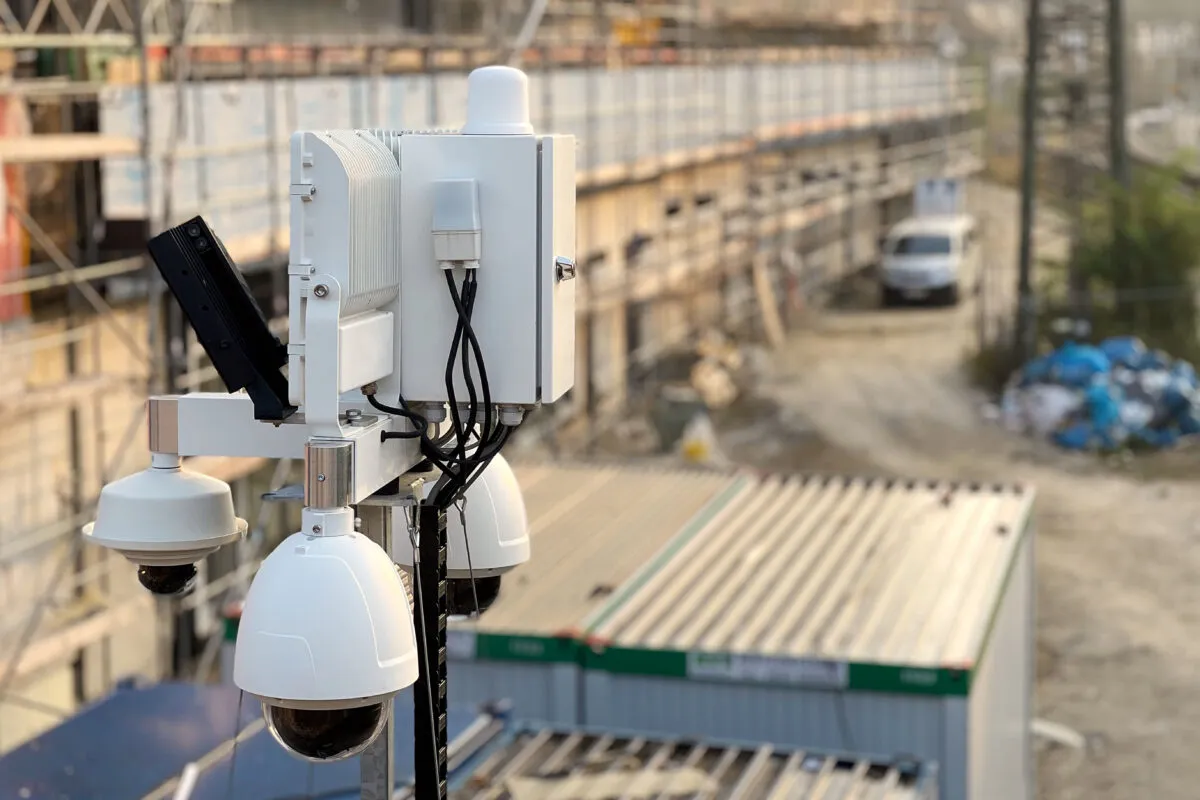
Construction sites, event spaces and other temporary locations rarely have fixed fences, a network or security technology. Our mobile video towers monitor them with AI video analytics, transmit via the mobile network and report alarms to an alarm receiving centre. We also supply fence monitoring and access management.
- Mobile video towerThe tower carries cameras with AI video analytics and a pan-tilt dome camera on an extendable mast.
- No fixed network connectionThe tower transmits via the mobile network. We match the power supply to the location.
- Alarm to the alarm receiving centreMessages are transmitted, checked there on the live image and passed on if necessary.
- For the duration of your projectWe agree the term, the form of provision and the scope of service with you in the quotation.
Protection in four shells
A security concept works from the outside in. Each shell detects earlier and buys time to respond.
1. PerimeterFence, gates, entrances
2. Open groundsVideo, radar, lighting
3. Building shellIntrusion alarm, access
4. Interior zonesAccess zones, fire, asset protection
From image to event
Modern video technology reports what matters instead of merely recording.
- 01CaptureCameras deliver images by day and night.
- 02AnalyseAnalytics recognise people and vehicles.
- 03ReportRelevant events go to the control centre.
- 04DocumentRecordings can be searched for specific events.
Risks on construction sites and temporary areas
Machines, tools and materials are stored on construction sites, often unattended overnight and at weekends. The site changes as construction progresses, so fixed security technology is rarely worthwhile.
What is needed is technology that is set up quickly, works without fixed infrastructure and can be relocated. Mobile video towers are suitable for this as well as for areas belonging to companies, industry and critical infrastructure.
Mobile video towers
The video tower monitors the site all round. The cameras switch automatically between day and night mode, and the AI video analytics detect movements of people and vehicles. The images are transmitted live via the mobile network and, on request, also locally by radio to the guard container.
On the power supply: the tower is connected to the site power supply or another mains connection. A built-in emergency power supply bridges outages. Where no connection is available, a self-sufficient power supply takes over, for example a fuel cell. We clarify which option is suitable during the site visit.
The mast version and the cameras fitted depend on the site. A public address system is available as an option, allowing the alarm receiving centre to speak directly to people on the site.
- Extendable mast for an overview of the site
- Cameras with AI video analytics and a pan-tilt dome camera
- Video storage and video management
- Transmission unit with mobile network router
- Emergency power supply, optionally a self-sufficient power supply
- Alarm and tamper monitoring
- Fault signal transmission
- Optional: public address system and wireless transmission on site
Electronic site fence monitoring
In addition to AI-based video triggering, a separate fence protection system can be installed. It secures the perimeter of the construction site and reports climbing over or opening of the site fence. The alarms are transmitted directly via one of the existing video towers.
An alarm at the fence can therefore be checked on the live image straight away. If the site grows, the fence protection is extended or relocated together with the site fence.
Access management for construction sites
For controlled access to the construction site we supply sliding gates and turnstiles, access readers for use on construction sites and the software for access management.
This lets you define which trades and persons may enter and drive onto the site at which times. Permissions can be time-limited and blocked once a contract has ended.
Events and temporary areas
The same technology is suitable for events. During set-up and dismantling, stages, equipment and materials are often left unguarded for days. During this time, mobile video towers secure the grounds, storage areas, vehicle entrances and car parks.
Electronic fence monitoring reports when the barrier is overcome outside opening hours. Turnstiles and access readers regulate access for staff, suppliers and service providers.
The security concept for the event and the stewarding remain the organiser's responsibility. We supply the technology for it and agree camera positions, signage and retention period with you.
Design to your wishes
We design and wrap the video tower in your design. If required, we also supply banners for the site fence or scaffolding.
Frequently asked questions
What length of deployment is a video tower suitable for?
Video towers are intended for time-limited deployments, from a few days at an event to the entire construction period. The tower can be relocated on the growing site and removed again at the end of the project. We agree the term, the form of provision and the scope of service with you in the quotation.
Does a video tower need power and internet?
The tower does not need a fixed network or internet connection, as it transmits via the mobile network. It draws power from the site power supply or another mains connection, and an emergency power supply bridges outages. If there is no connection, we use a self-sufficient power supply. We agree the installation date with you.
What happens if the tower detects an intruder at night?
The AI video analytics are designed to distinguish people and vehicles from other movements. They report the incident to the alarm receiving centre. The live image is checked there. If a public address system is installed, the intruder is addressed directly. If necessary, the alarm receiving centre alerts the response service or the police.
What needs to be considered for data protection?
The operator is responsible for the video surveillance, usually the client or the construction company. The cameras should cover only your own site, and public paths and neighbouring properties are masked out. Information signs are mandatory. The GDPR does not set a fixed retention period. The supervisory authorities generally consider up to 72 hours appropriate, and longer retention needs a justification. We set up privacy masking, permissions and deletion periods accordingly.