Sectors
Airports & air cargo
Airside, security restricted areas and secure supply chain.
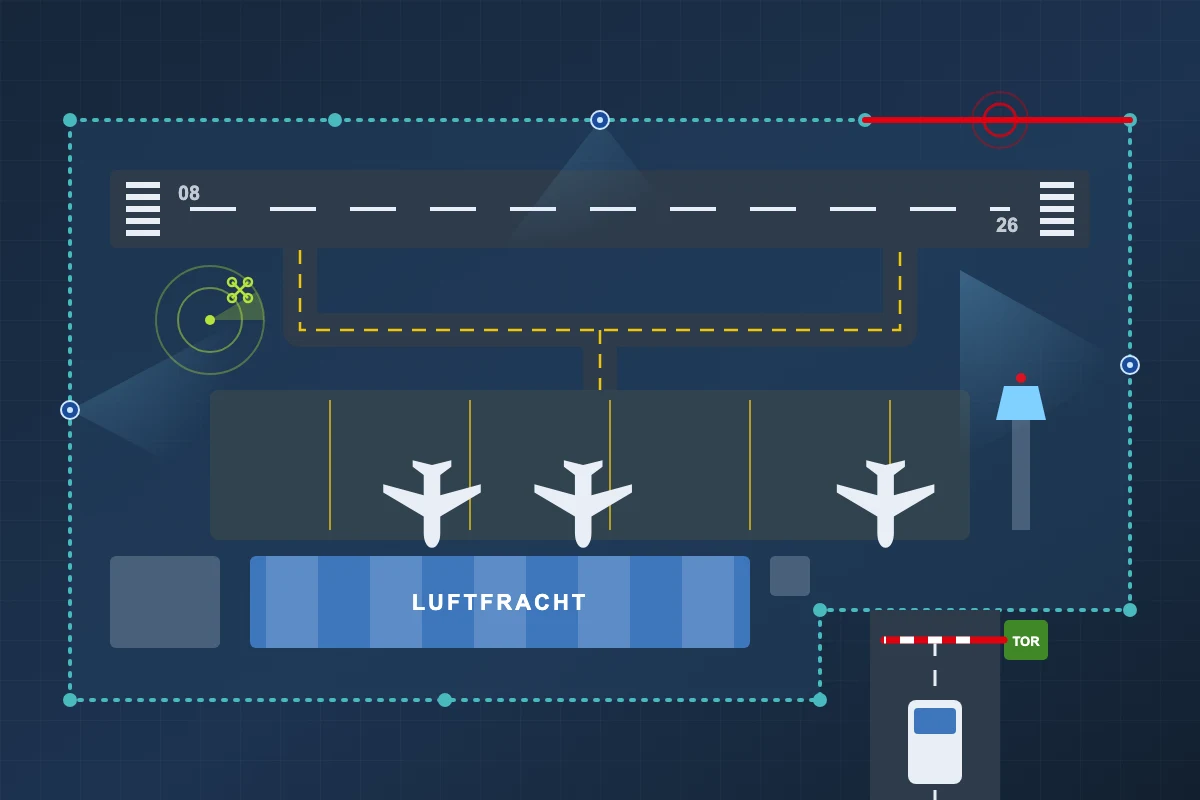
For airport operators, air cargo handlers and companies at airports we plan, install and maintain the security technology that the Aviation Security Act and EU law presuppose: fence protection, access to security restricted areas, vehicle access control and video surveillance of large areas.
- Technicians with background checkOur staff are vetted under section 7 of the Aviation Security Act and may work in security restricted areas.
- Experience in air cargoWe already look after security systems for an air-cargo hub at Leipzig/Halle Airport.
- Close to the airportIt is around 30 kilometres from our head office in Landsberg. The service hotline is staffed around the clock.
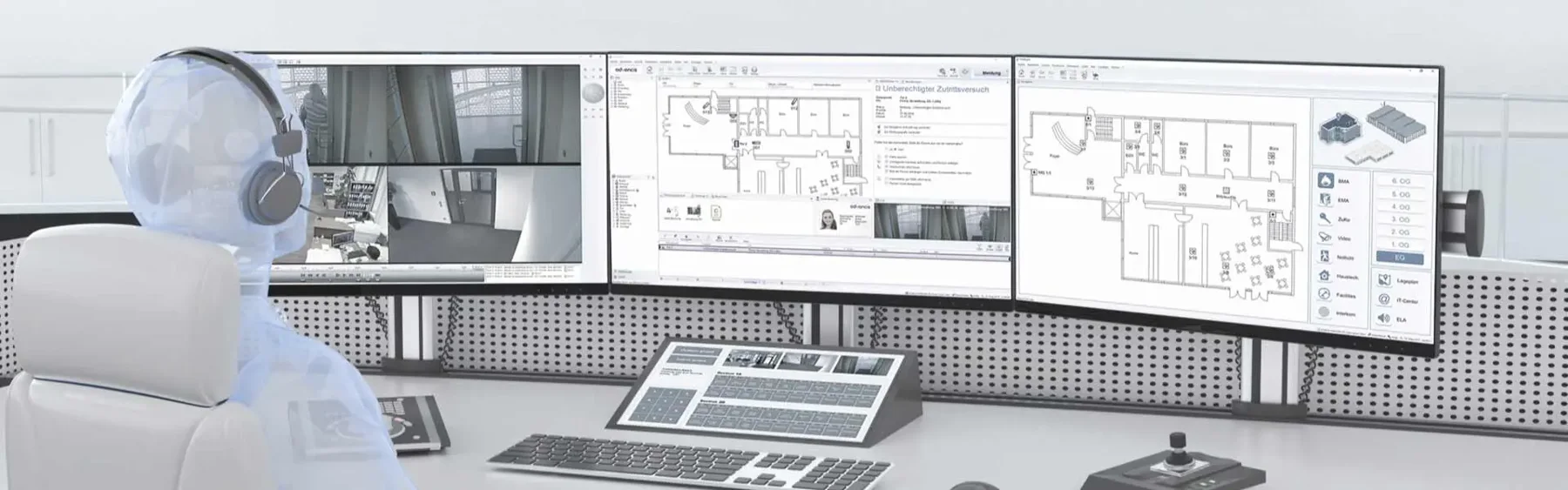
- Everything in one control roomFence, access, video and fire detection come together in the security management system.
Fence and airside: what operators must secure
The German Aviation Security Act obliges aerodrome operators to secure airside areas against unauthorised access and to build and maintain facilities so that the necessary structural and technical protection is possible. Regulation (EU) 2015/1998 requires a physical barrier between landside and airside that is clearly visible and denies unauthorised access.
How often and by what means the boundaries are monitored is determined by the operator on the basis of a risk assessment and approved by the authority. This is where technology comes in: it reports where something is happening at the fence and immediately shows the control room the matching image.
What the rules require
- Visible physical barrier between landside and airside
- Clearly recognisable boundaries of security restricted areas
- Surveillance and patrols based on a risk assessment, without a predictable pattern
- Measures against the breaching of checkpoints
What we build for this
- Fence sensors that locate the affected zone
- Thermal and video technology for long fence lines
- Radar and laser detection for the area in front of the fence
- Routing of all alarms to the security control room
Access to security restricted areas and identification cards
Only people with valid authorisation may enter security restricted areas. At access points the EU regulation requires either an electronic system that limits access to one person at a time or checks by authorised staff.
Airport identification cards are valid for a maximum of five years and must be disabled immediately after return, expiry or loss. A system that detects the attempted use of lost, stolen or unreturned cards is also mandatory.
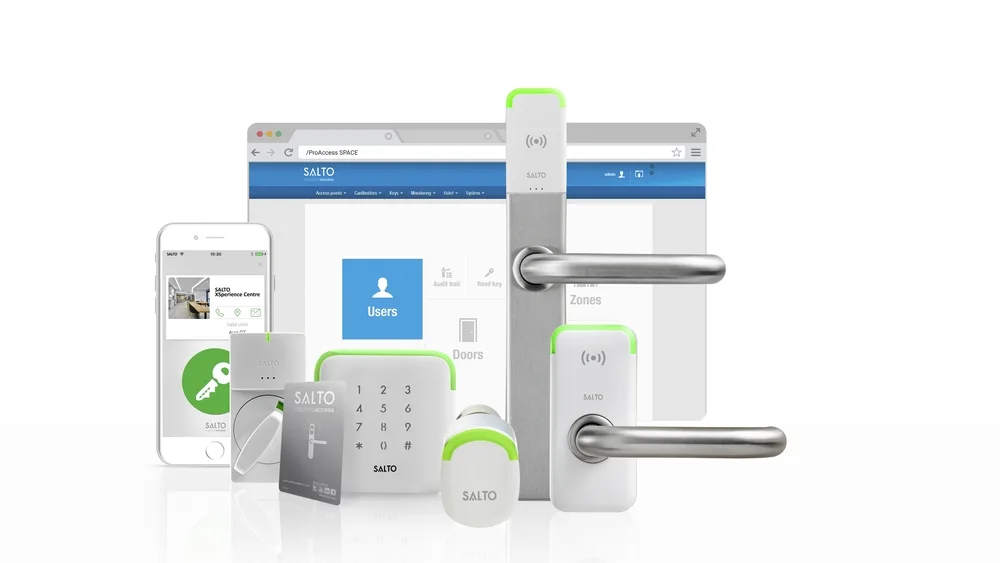
What the access system must deliver
- Singling at turnstiles, interlocks and full-height turnstiles
- Authorisations by area and time, revocable immediately
- Alarm on disabled or expired cards
- Complete logs for the aviation security authority
- Visitor passes and escorted access can be mapped
- Connection to the pass office and HR systems
Turnstiles
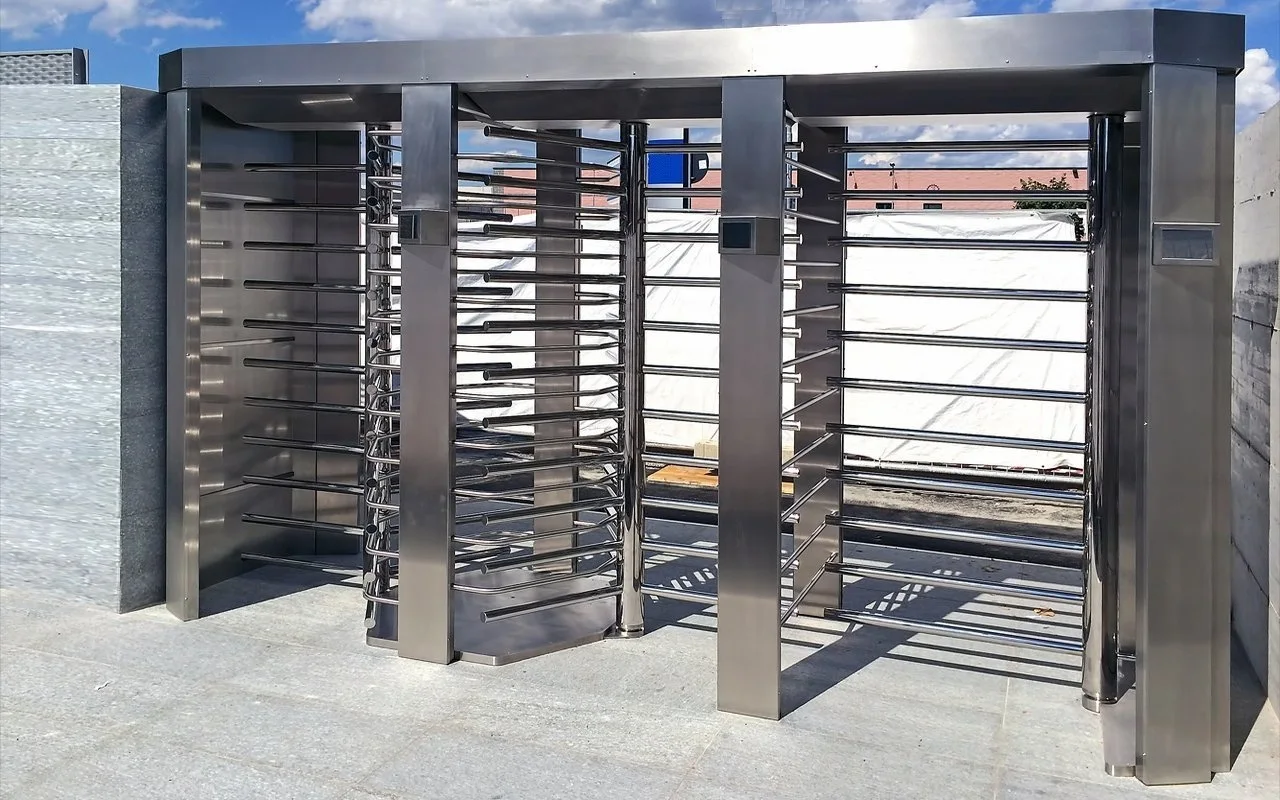
Turnstile, waist height
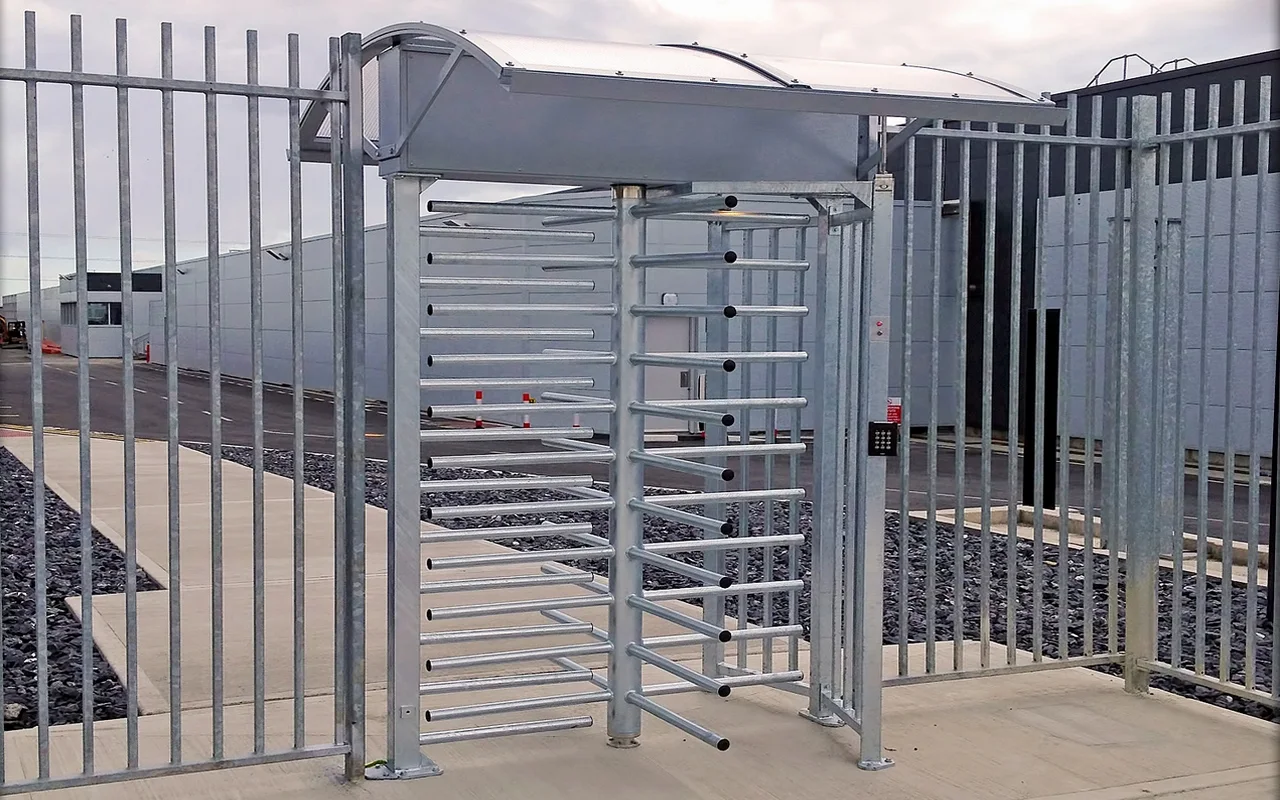
Turnstile with optional roof
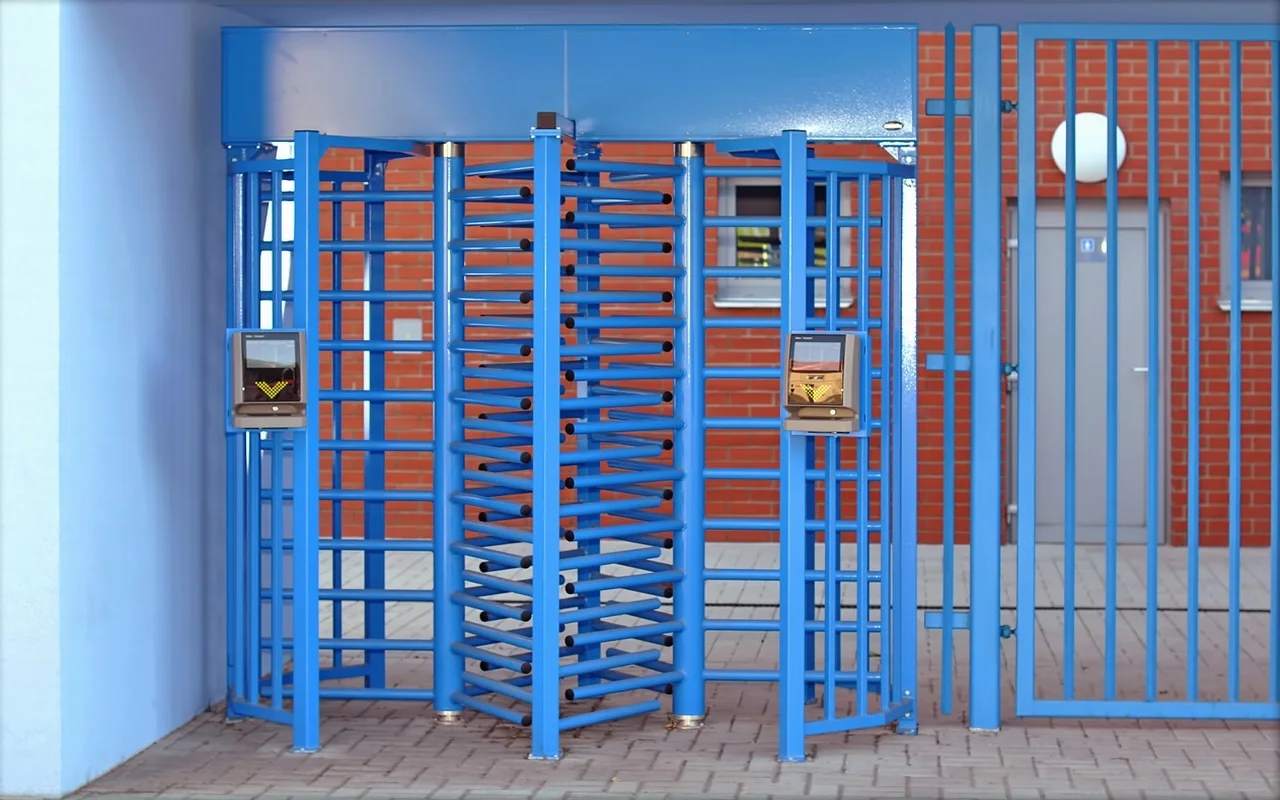
Double turnstile
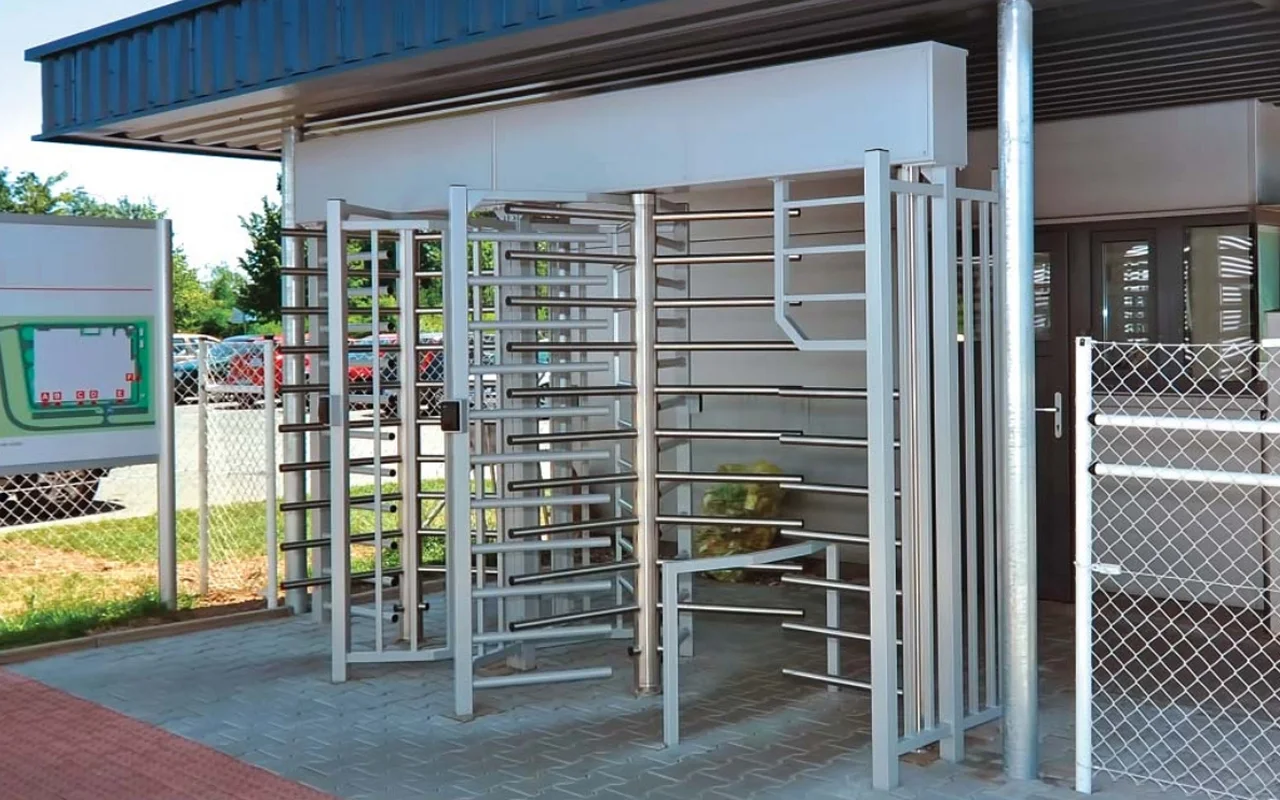
Turnstile with bicycle gate
Gates, vehicle access and vehicle passes
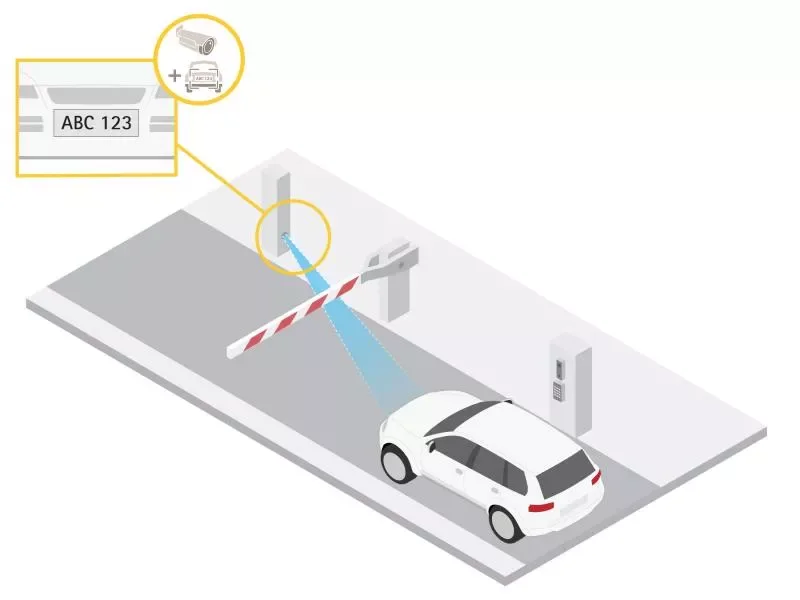
Vehicles need a visible, valid vehicle pass for airside, which is checked before entry. Electronic vehicle passes must be electronically readable airside. All vehicles are examined before entering critical parts of security restricted areas.
We plan vehicle entrances with barriers, high-speed gates and vehicle blockers and link them to number plate recognition and the access system. Every entry and exit is thus documented with time, vehicle and authorisation.
Video surveillance of large areas
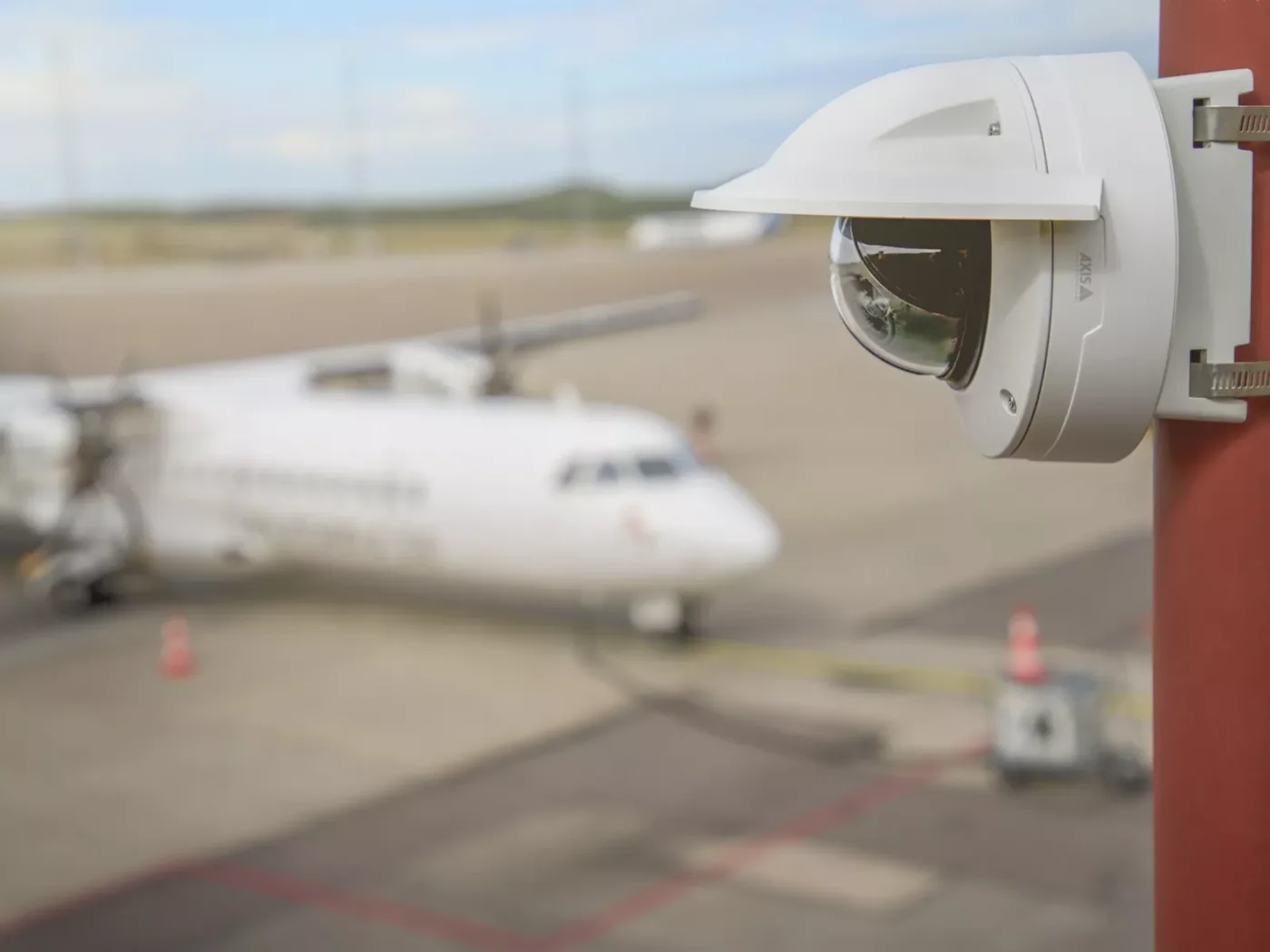
Under the EU regulation, the boundaries between areas, terminal buildings and publicly accessible areas including car parks and access roads, as well as baggage, cargo and mail in critical parts, must be kept under surveillance.
On the apron, cargo areas and long fence lines, range and analysis are what count. We use cameras with video analytics that detect people and vehicles in restricted zones and bring the images together in a video management system.
Examples of use at the airport
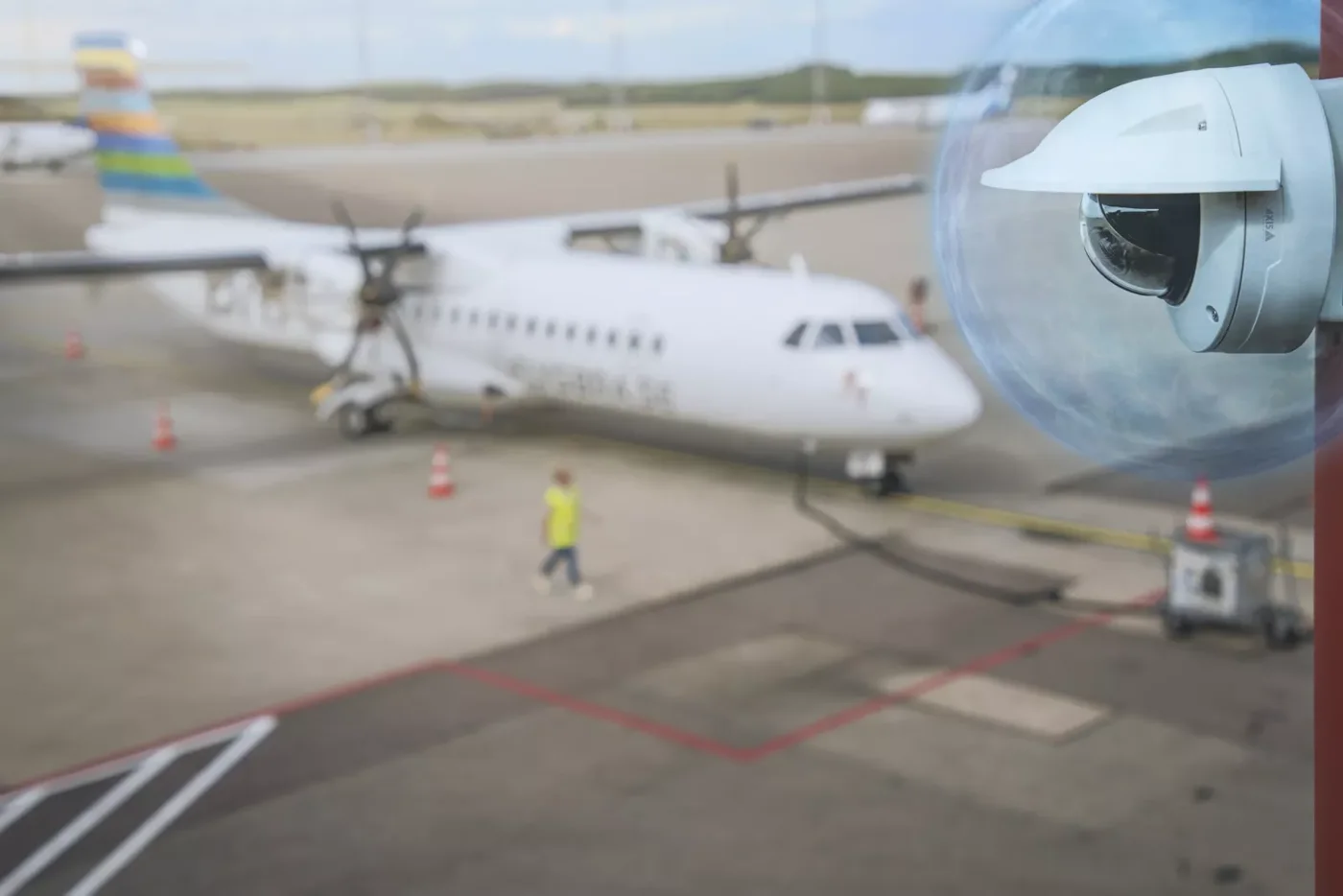
Apron and aircraft handling
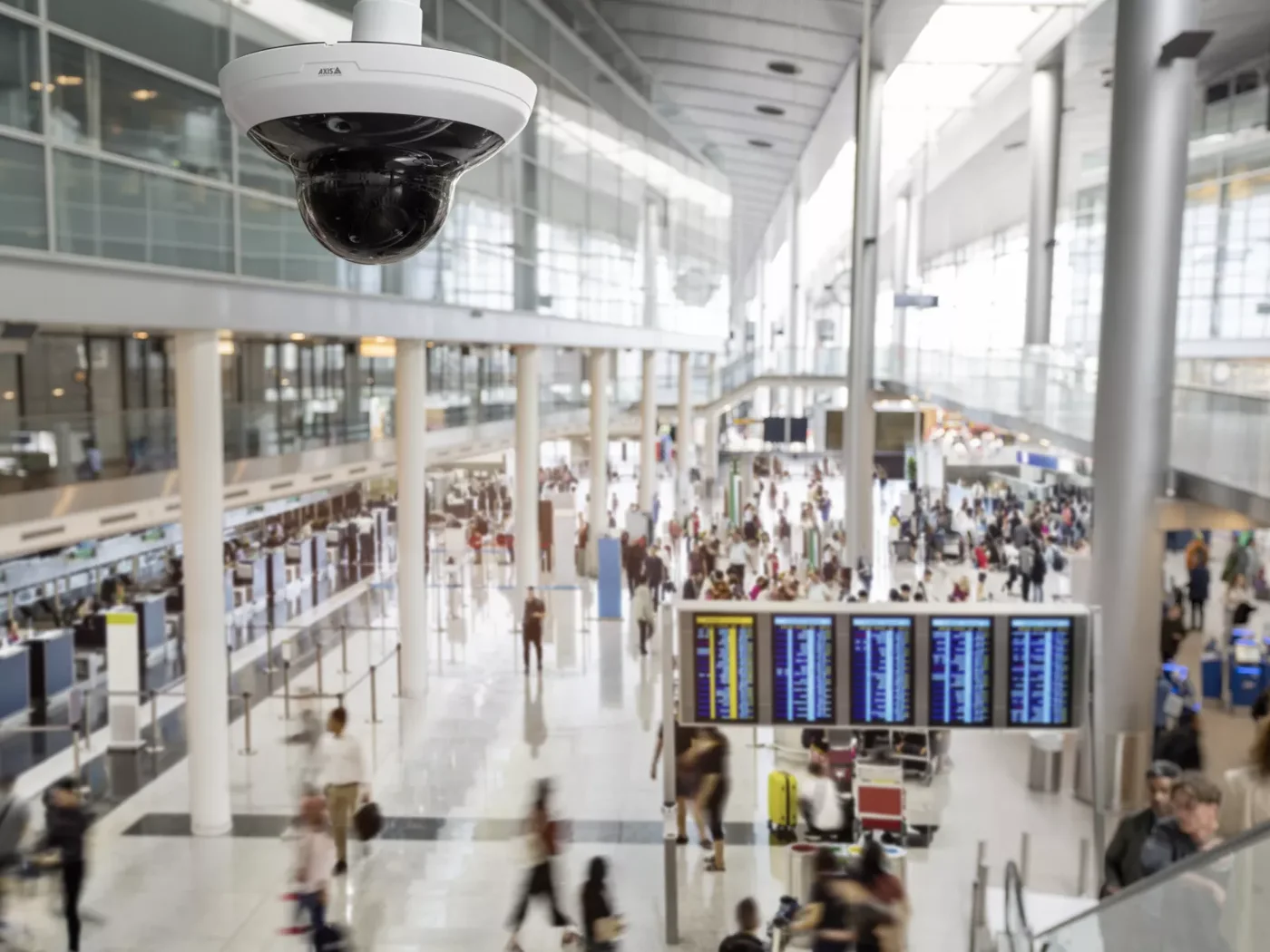
Check-in hall
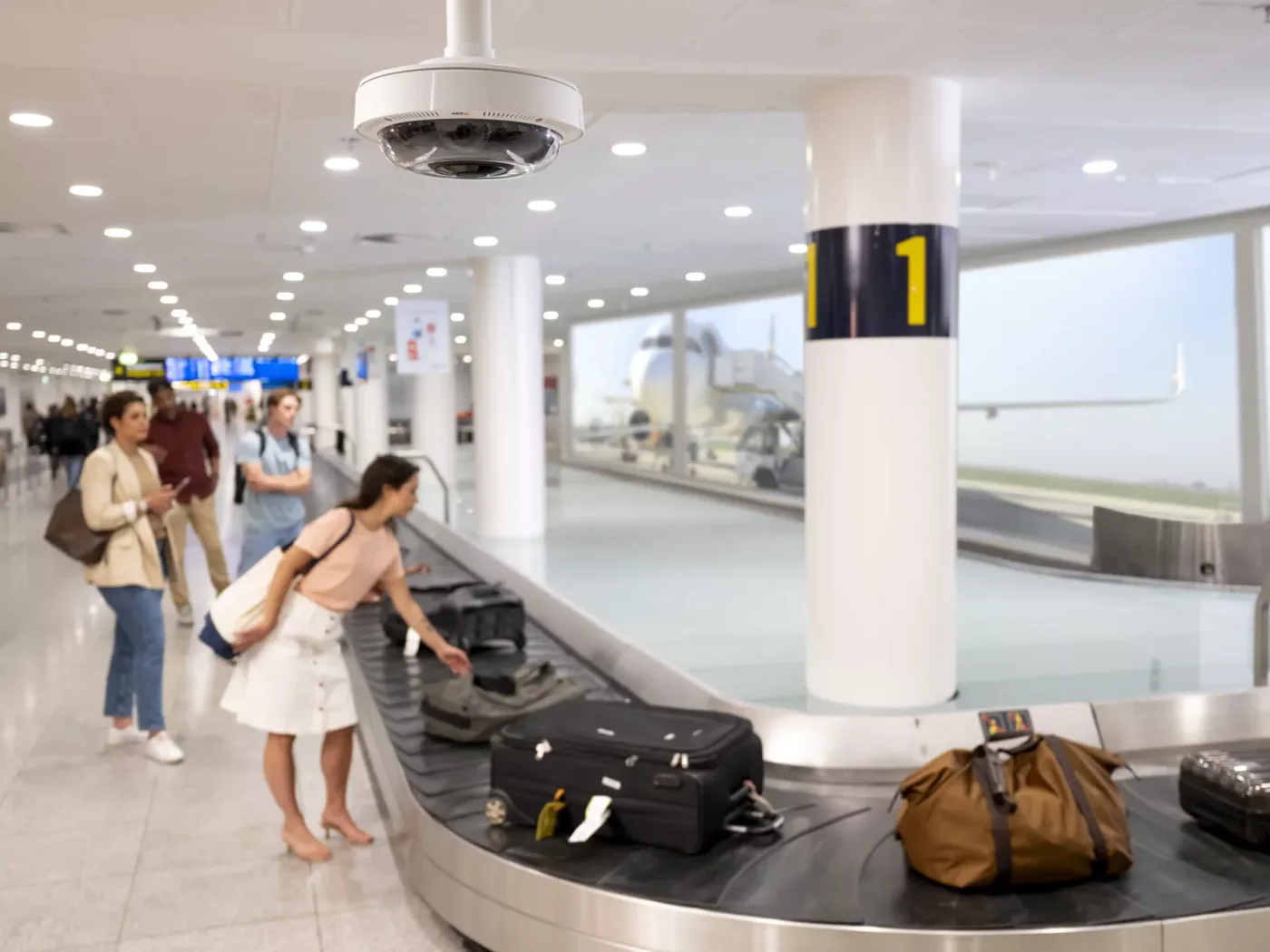
Baggage reclaim
Air cargo and companies at the airport
Cargo may only be loaded without renewed screening if it comes from a secure supply chain. Known consignors and regulated agents must secure their sites so that no one can reach consignments without authorisation. The German Federal Aviation Office checks this on site and returns unannounced.
No particular technology is prescribed, but the result is. For manufacturers, freight forwarders and cargo handlers we plan segregated air cargo areas, access only for vetted staff and surveillance of storage and loading. Our two guides explain the requirements in detail.
Typical tasks
- Storage cages and rooms for secure air cargo with their own access zone
- Individually revocable authorisations for own and external staff
- Alarm system with remote monitoring and video with defined retention
- Maintenance records for inspection by the aviation authority and customs
Guides on the topic
- Known consignor: what the aviation authority requires at your site
- AEO certification: which security technology customs expects
- You will find both articles in the Knowledge section.
Drones: detect, document, report
In 2025 the German air navigation service provider recorded 225 disruptions caused by drones in German airspace, after 161 the year before. It notes that the increase may also be due to the Federal Police's new detection systems.
Countering drones is a task of the state: the Federal Police are responsible on airport premises, the state police outside. Operators and companies at the airport can, however, ensure that sightings are detected early, documented with image and time and reported without delay.
Jammers and other countermeasures are reserved for the authorities. We plan detection, documentation and alerting only.
More on drone detectionCritical infrastructure, NIS 2 and cyber security
Under the German BSI critical infrastructure regulation, aerodromes count as critical facilities if they handle 20 million passengers or 750,000 tonnes of cargo a year. Independently of this, the new BSI Act implementing the NIS 2 Directive covers airports and entities operating associated facilities within airports.
The KRITIS umbrella act has been in force since March 2026. As measures it explicitly names site protection with property boundaries, monitoring of the surroundings, detection equipment and access controls. Which facilities are covered will be set out in a regulation that is still pending.
Aviation security itself also requires cyber protection: operators must identify their critical IT systems and protect them from attacks. Anyone with administrator rights to these systems needs a background check. This also applies to installers.
Working in security restricted areas: what we bring
Anyone who works more than occasionally in the security restricted area of an airport needs the background check under section 7 of the Aviation Security Act. Staff of external companies are treated like the operator's own staff. An airport identification card additionally requires security awareness training under point 11.2.6 of the EU regulation.
Our technicians hold the background check and already work for an air-cargo hub at Leipzig/Halle Airport. We know the procedures at the pass office, the screening of tools and vehicles at the access points and working during round-the-clock operations.
What you can rely on
- Technicians with background check under section 7 Aviation Security Act
- Experience in the air-cargo environment at Leipzig/Halle Airport
- Head office in Landsberg, around 30 kilometres from the airport
- Service hotline around the clock
- VdS-approved installer, certified to ISO 9001 and DIN 14675
- Maintenance with records for authorities and audits
Security at the airport: clear rules, a lot of ground
Hardly any site is regulated as precisely as an airport. The Aviation Security Act and the EU regulations lay down who may go where, how boundaries are secured and access points controlled. At the same time the areas are vast, operations run around the clock and hundreds of companies work on the same premises.
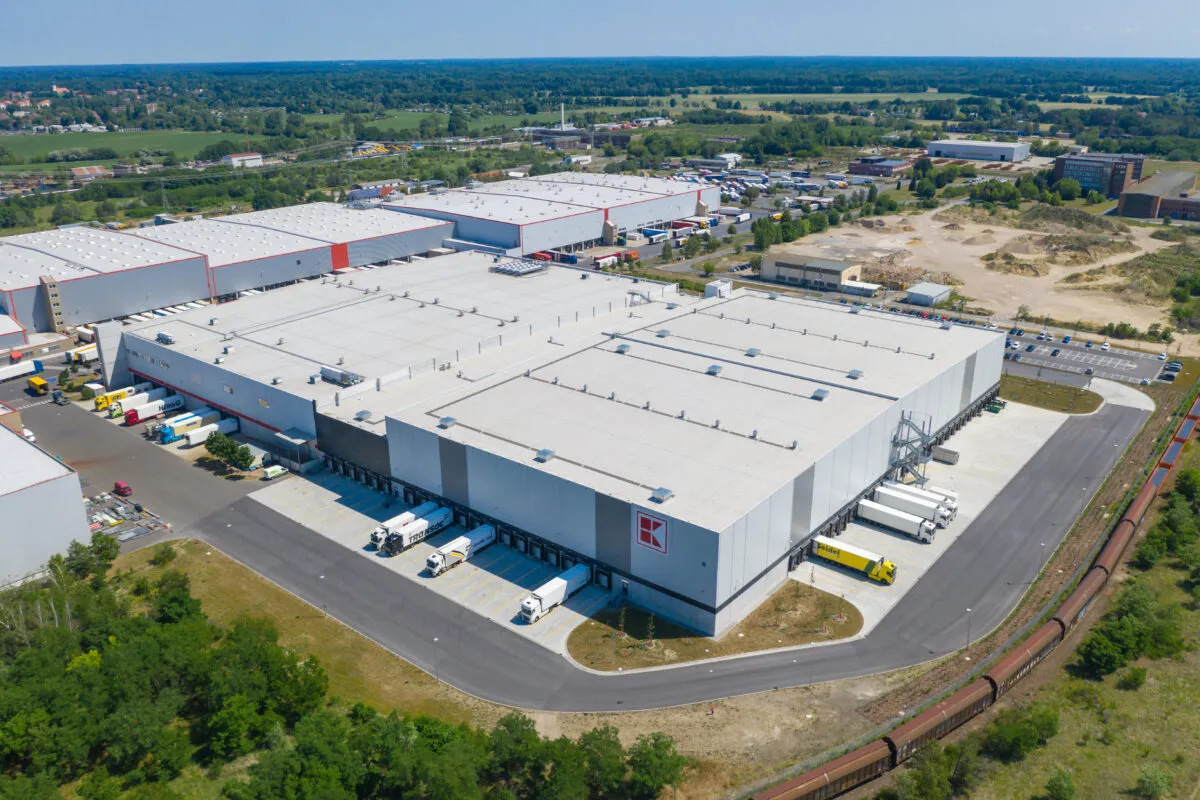
Leipzig/Halle Airport shows this particularly clearly: by its own account it is Germany's second-largest cargo airport, handled around 1.4 million tonnes of cargo in 2025 and operates cargo traffic without a night break. More than a hundred companies work at the site.
Standards and certifications
- LuftSiG § 8
- VO (EU) 2015/1998
- DIN 14675
- VdS
Frequently asked questions
May your technicians work in the security restricted area of an airport?
Yes. Our technicians hold the background check under section 7 of the Aviation Security Act. The airport identification card is issued by the pass office of the respective airport after the prescribed training.
Is specific technology prescribed for the airport fence?
No. What is prescribed is a visible physical barrier between landside and airside and surveillance based on a risk assessment approved by the authority. The technology the operator uses to achieve this is not specified.
Who is responsible for countering drones at the airport?
The Federal Police on airport premises, the state police outside. Companies can detect, document and report sightings but may not take countermeasures themselves.
Do companies at the airport need known consignor status?
No, the status is voluntary. Without it, air cargo counts as unsecured and is screened before loading, which can cost time and money.